Crash Victims Remembrance Day: GRA Partners LASTVEB, Launches Free Distribution Of 500 Bicycles To Lagos Schools
OLORUNDARE ENIMOLA, Lagos
As part of activities to mark the 2025 United Nations World Day of Remembrance for Road Crash Victims, the Gabriel Rotimi Aroge Empowerment Foundation (GRA), in partnership with the Lagos State Technical and Vocational Education Board (LASTVEB), has launched a school cycling mobility programme aimed at improving road safety and transportation access for secondary school students.
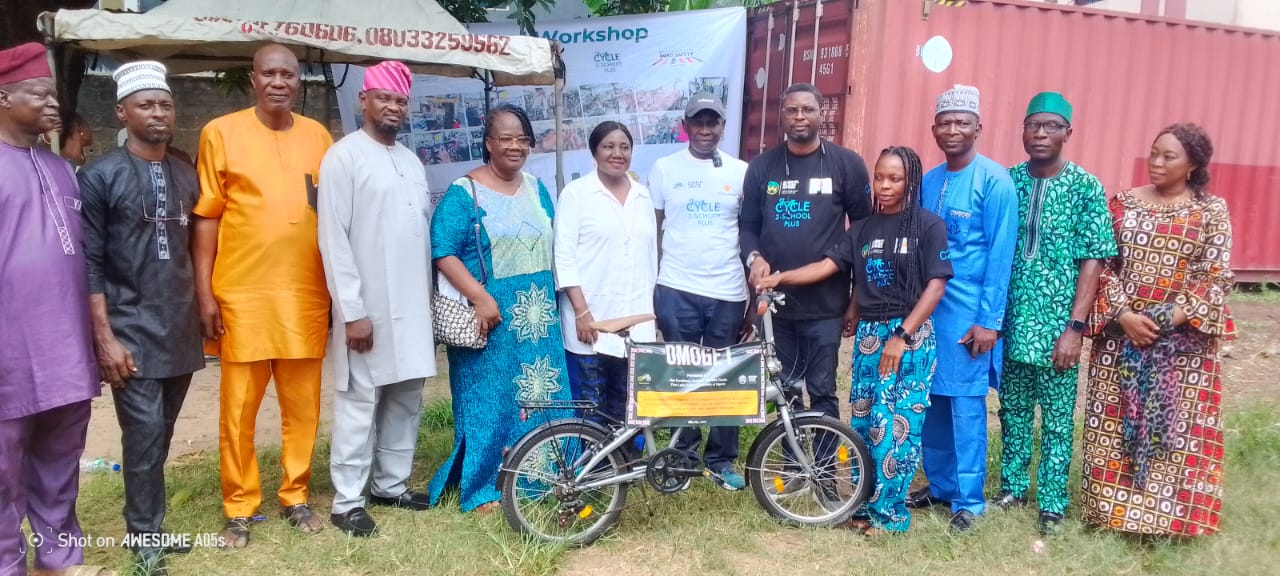
The initiative, tagged Cycle-to-School-Plus (C2S+), kicked off on Friday at Government Technical College, Ikotun, where the Foundation commissioned and began the free distribution of 500 bicycles to selected government-owned schools in Lagos. The bicycles were unveiled from a cargo container of 505 units, marking the first phase of what organisers describe as a long-term cycling empowerment project.
Speaking during the flag-off, Executive Secretary of LASTVEB, Ms. Moronke Azeez, said the programme aligns with the Board’s mandate to enhance educational access through mobility, skill acquisition and safe commuting for students.
“Education is not only what we learn in the classroom but also the experiences we gain along the way,” she said. “With these bicycles, students develop life skills and values. They can build bicycle clubs, safety networks and environmental advocacy groups.”
She urged beneficiaries to prioritise safety, obey traffic rules and maintain the bicycles responsibly, describing the gesture as an investment in the youth
President and Founder of the GRA Foundation, Mr. Rotimi Aroge, represented by the National Coordinator, Dr. Al-Mahroof Ashiru, said the Foundation’s goal was not just to provide bicycles, but to promote a culture of discipline, compliance and transportation equity.
“We want to change behaviours and build road safety consciousness. Some argue that Nigeria lacks dedicated bicycle lanes, but safety is about attitude, not only infrastructure,” he said.
Aroge noted that the C2S+ bicycles will remain the property of the schools and will be handed from one set of students to another after graduation. Beneficiaries are selected through a structured process involving route mapping, screening and road-risk evaluation, using digital tools and school profiling.
He added that beneficiaries would be monitored and trained in safe riding. Exceptional students may qualify for rewards, scholarships and technical opportunities.
A key component of the project is skill development. The Foundation and LASTVEB plan to train students in bicycle engineering, mechanical repairs and road safety techniques. The Principal of Government Technical College, Ikotun, Mrs. Ibukun Onagbola, said the programme complements the school’s technical curriculum.
“We want our students to become future bicycle engineers. This sets the foundation for a new vocational skill sector,” she said.
Aroge disclosed that the container clearance alone cost nearly ₦15 million for customs clearing and other logistics, saying the Foundation had hoped for more private sector contributions.
“We expected more support from corporate stakeholders. But we won’t be discouraged because this programme helps keep young people out of risky environments,” he said.
The bicycles were donated through the Foundation’s UK partner, Recycle Bikes to Africa.
Part of the event featured a road-safety video skit competition involving several Lagos schools, with Community Junior Grammar School winning the top prize of ₦100,000 and safety materials. The competition highlighted messaging on pedestrian risks, distracted driving and safe commuter habits.
The Foundation has already mapped 20 more schools for the next phase in Alimosho. Escort marshals and bicycle workshops will be deployed to support students along designated routes.
Assembly of the bicycles begins in December, with full rollout expected by January 2026.
Organisers say the initiative is a tribute to lives lost in road crashes and a long-term strategy for safer school commuting. They expressed confidence that the cycling programme will help reduce transport costs, improve safety and promote responsible mobility culture among young people in Lagos.