

Lagos Flags Off N150bn CNG Trucks Scheme to Modernise Logistics Sector
OLORUNDARE ENIMOLA/VICTORIA OJUGBANA, Lagos
The Lagos State Government has launched a ₦150 billion Compressed Natural Gas (CNG) Trucks Scheme aimed at transforming the state’s logistics and haulage ecosystem through cleaner energy, improved safety standards and structured financing for truck operators.
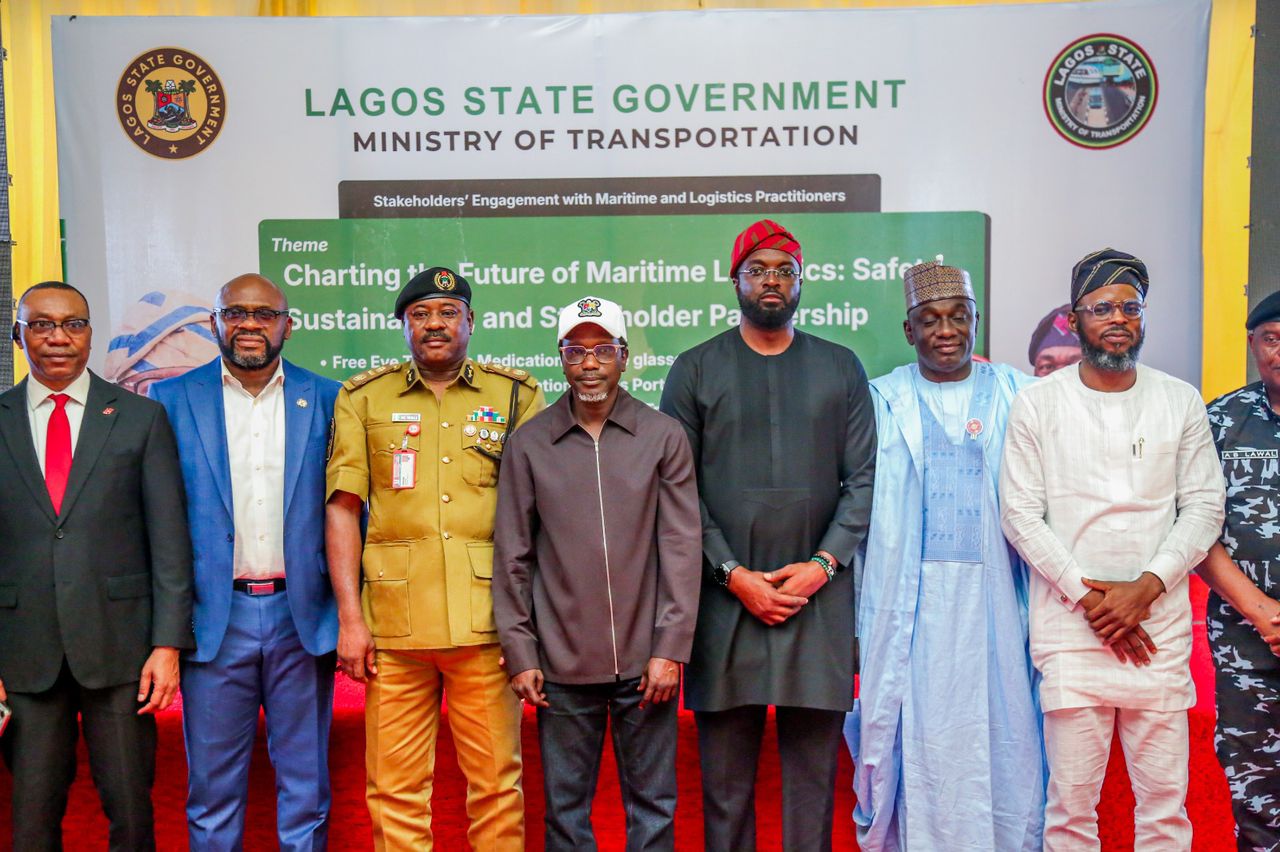
The scheme, a Public-Private Partnership (PPP) initiative, was unveiled on Wednesday by Governor Babajide Sanwo-Olu at a Stakeholders’ Engagement with Maritime and Logistics Practitioners held in Lagos. The forum was themed “Charting the Future of Maritime Logistics: Safety, Sustainability and Stakeholder Partnership.”
Represented by his Special Adviser on Transportation, Mr. Sola Giwa, the governor said the initiative was designed to address longstanding safety concerns associated with the widespread use of ageing and poorly maintained trucks operating along Lagos’ major logistics corridors.
“One of the most pressing issues raised over the years is the prevalence of ageing, poorly maintained and sometimes unsafe trucks on our roads,” Giwa said. “Many of these vehicles have exceeded their operational lifespan, with compromised braking systems, weakened frames, worn-out tyres and faulty lighting. They pose serious danger to operators, other road users and the cargo they convey.”
He stressed that Lagos, as Nigeria’s commercial nerve centre, could not aspire to be a globally competitive logistics hub while relying on obsolete heavy-duty vehicles. According to him, the new programme will enable truck owners to replace rickety fleets with brand-new CNG-powered trucks through affordable and well-structured credit facilities.
“We must move away from the era in which heavy-duty transportation is carried out with rickety assets. Government has therefore initiated a programme that supports fleet renewal through accessible financing,” Giwa said, adding that discussions were already ongoing with financial institutions and development partners to design flexible loan products for operators across all levels.
The initiative is expected to modernise truck fleets, reduce highway breakdowns, improve turnaround times at ports and logistics hubs, and enhance compliance with international haulage and safety standards.
Giwa also announced plans to expand digital infrastructure for logistics management, particularly along the Lekki corridor, noting that the electronic call-up system would continue to evolve to enhance transparency and accountability.
“The sector does not thrive through government effort alone. It thrives through collaboration between the public and private sectors, between regulators and operators, unions and enforcement agencies,” he said. “Our goal is to eliminate disorder, reduce costs, shorten journey times and create a predictable flow of goods.”
Earlier, the Commissioner for Transportation, Mr. Oluwaseun Osiyemi, disclosed that about 2,000 CNG-powered trucks would be made available to operators under the scheme. He described the programme as a landmark step toward repositioning Lagos’ logistics sector for safety, environmental responsibility and sustainability.
“Our investment goes beyond dialogue. It represents a collective resolve to build a cleaner, safer and more efficient logistics ecosystem,” Osiyemi said, highlighting government initiatives such as free eye screening for truck drivers, substance abuse sensitisation and routine drug testing to reduce road accidents and improve operator welfare.
He noted that the transition to CNG trucks aligned with Lagos State’s broader sustainability goals and commitment to reducing carbon emissions from freight movement.
Speaking on drug abuse prevention, Chairman of the National Drug Law Enforcement Agency (NDLEA), Brig.-Gen. Buba Marwa (rtd.), commended the Lagos State Government for integrating substance abuse sensitisation and testing into the logistics reform agenda. He said such measures would enhance compliance, reduce accidents and strengthen public safety across transport corridors.
“Drug abuse is a collective challenge that requires all stakeholders – government, communities, religious and traditional leaders – to confront,” Marwa said, pledging NDLEA’s continued collaboration with Lagos State to create safer transport environments.
Managing Director of the Nigerian Railway Corporation (NRC), Mr. Kayode Opeifa, urged truck owners to embrace the CNG initiative, warning that failure to modernise could leave operators behind as the sector evolves.
“This is not just a Lagos State Government programme; it is a programme for truck owners,” Opeifa said. “If operators fail to adapt, new players will emerge and take over the space. Modernisation, compliance and transparency are no longer optional.”
He also called for stricter enforcement of vehicle inspection regulations, insisting that no truck should operate along Lagos’ maritime corridors without meeting state safety and inspection requirements.
President of the Nigerian Association of Road Transport Owners (NARTO), Alhaji Yusuf Othman, welcomed the scheme, describing CNG as a clean, safe and cost-effective energy alternative. He assured that NARTO members would make judicious use of the new trucks and operate them profitably to meet loan obligations.
“This is not free money; it is a serious investment,” Othman cautioned. “Operators must have the capacity to run the business efficiently and repay the loans so others can benefit in the future.”
He added that the initiative would phase out rickety trucks, create new employment opportunities and boost investments in the maritime and logistics sector, positioning Lagos to better leverage opportunities under the African Continental Free Trade Area.
In a closing address, Governor Sanwo-Olu said the engagement underscored the collective responsibility of government and stakeholders to shape the future of an industry that remains central to Lagos’ economy and Nigeria’s supply chains.
“The maritime and logistics sector contributes significantly to revenue, employment and industrial productivity,” the governor said. “Through sustained partnership, shared understanding and decisive action, we can build a safer, cleaner and more resilient logistics system for our state.”
The CNG Trucks Scheme is expected to roll out in phases, with participating operators accessing vehicles through approved financial institutions under agreed repayment terms.
