
Nigeria Seeks Private Investment, Climate Finance To Expand CNG, EV Adoption
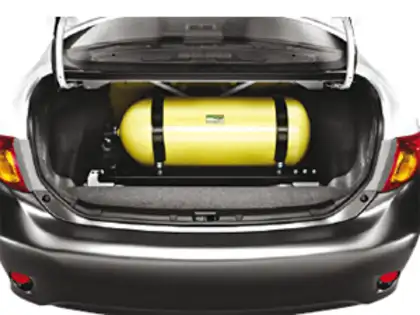
The Federal Government has intensified efforts to attract private sector investment and international climate financing to accelerate the adoption of Compressed Natural Gas (CNG) and electric vehicles (EVs) across the country.
The move is aimed at expanding cleaner transportation infrastructure, reducing dependence on petrol and diesel, improving energy security and making transportation more affordable.
The Presidential Initiative on Compressed Natural Gas and Electric Vehicles (Pi-CNG/EV), alongside the Nigerian Midstream and Downstream Petroleum Regulatory Authority (NMDPRA), made the appeal during a side event on mobilising green finance for low-carbon transportation at the ongoing COP31 climate conference in Antalya, Türkiye.
Speaking at the event, the Chief Investment Officer of the Pi-CNG/EV initiative, Babajide Awolowo, said Nigeria’s transition to cleaner mobility had moved beyond climate commitments and was increasingly presenting significant investment opportunities.
He disclosed that the initiative had facilitated the conversion of more than 140,000 vehicles to CNG, established over 100 CNG retail stations and 17 mother stations, and deployed more than 550 CNG-powered buses within its two years of implementation.
Awolowo added that the programme had attracted approximately $2.6bn in investments from government and private sector participants.
He highlighted growing state-level partnerships, including the deployment of 2,000 CNG trucks in Lagos, 100 buses in Enugu, 200 in Nasarawa, and 50 buses each in Delta and Edo states.
According to him, major private sector operators such as Dangote, Lafarge and the Nigerian National Petroleum Company Limited are also transitioning portions of their transport fleets to CNG, involving more than 10,000 trucks and vehicles.
On electric mobility, Awolowo revealed that 12 EV charging stations were under development across major cities, while 40 electric buses had been deployed. He also disclosed plans for a battery-swapping programme targeting 800 electric tricycles in selected northern states.
He further said 37 electric buses had been deployed in the Federal Capital Territory, with plans to increase the number to 100 before the end of 2026.
However, he stressed the need for additional investments in local vehicle assembly, battery-swapping networks, charging facilities, public transportation and renewable-powered mobility solutions to strengthen the sector and create employment opportunities.
Also speaking, the Director of Environment Management and Host Community at the NMDPRA, Ann Omezi, who represented the Authority’s Chief Executive, said Nigeria’s energy transition must reflect the country’s economic realities rather than rely entirely on imported climate solutions.
She noted that the transition should address the everyday transportation and energy costs confronting Nigerians, particularly workers, traders, businesses and commercial transport operators.
Omezi described natural gas, especially CNG, as an important transitional fuel that could complement electric vehicles and other energy-efficient transportation options.
Citing the NMDPRA’s September 2026 monthly fact sheet, she disclosed that Nigeria recorded average domestic petroleum consumption of approximately 44.4 million litres daily, highlighting the country’s continued dependence on conventional transport fuels and the potential for increased domestic gas utilisation.
She, however, cautioned that CNG should not be regarded as an entirely emissions-free energy source, noting that its environmental benefits must be assessed against the fuels it replaces, while considering methane leakage, operational efficiency and emissions across the value chain.
Omezi added that the regulator was strengthening licensing procedures, digital permitting, emissions monitoring and safety oversight to provide investors with a predictable operating environment.
She also urged development finance institutions to explore blended financing, guarantees, concessional loans and equipment leasing to address the high initial costs associated with clean mobility investments.
Meanwhile, the Head of Electric Vehicles at the presidential initiative, Gboye Odutola, identified foreign exchange exposure and the difficulty of attracting international climate finance as major challenges facing the sector.
He explained that while operators generated revenue in naira, many international climate funds provided financing in dollars, exposing investors to currency risks.
Odutola said the initiative was working to aggregate commercial buses, government fleets, two-wheelers and three-wheelers into larger investment opportunities capable of attracting international funding.
He further disclosed that N15bn raised through three green bonds issued in the previous year had been earmarked for the initiative’s programmes, with a significant portion allocated to electric mobility infrastructure.
Similarly, the Head of the Climate Finance Desk at the Development Bank of Nigeria, Omosede Imohe, said international climate financiers were increasingly prioritising large-scale, coordinated programmes over isolated projects.
She revealed that the bank was advancing a $275m programme to mobilise financing from the Green Climate Fund, with the mobility sector included despite the challenges associated with securing funding for transportation projects.
Imohe explained that aggregating smaller projects into comprehensive programmes would improve their chances of accessing international climate finance, particularly for businesses unable to independently meet the funding requirements of global institutions.
The Executive Chairman of Pi-CNG/EV, Ismaeel Ahmed, also highlighted Nigeria’s investment potential, citing its large population and heavy reliance on road transportation.
He maintained that the country’s transportation market offered significant opportunities for investors, given that most vehicles on Nigerian roads serve commercial purposes.
The Federal Government has continued to position CNG as a transitional alternative to petrol and diesel, particularly for commercial transportation, while promoting electric mobility as a longer-term option for reducing emissions and dependence on imported petroleum products.
However, the expansion of both alternatives will depend largely on adequate refuelling and charging infrastructure, reliable electricity supply, affordable vehicles, accessible financing and the development of a sustainable domestic supply chain.
Nigeria’s ability to attract the required investments, establish predictable regulatory frameworks and provide credible emissions data will therefore remain critical to translating its clean transportation ambitions into practical economic and environmental benefits.