Ministry, NSIB Move To Strengthen Waterways Safety Collaboration
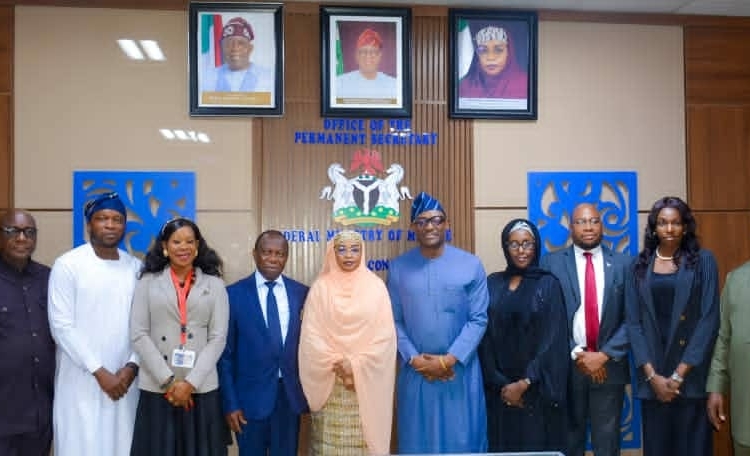
The Federal Ministry of Marine and Blue Economy and the Nigerian Safety Investigation Bureau (NSIB) have commenced discussions on strengthening inter-agency collaboration to improve safety across Nigeria’s waterways.
The Permanent Secretary of the ministry, Mrs Fatima Sugra Tabi’a Mahmood, disclosed this on Wednesday in Abuja when she received a delegation from the NSIB, led by its Director-General, Capt. Alex Badeh Jnr., on a courtesy visit.
Mahmood said the engagement was aimed at clarifying the mandates of institutions operating within the marine and blue economy sector and improving coordination on waterways safety.
She explained that the ministry was undertaking a comprehensive review of the marine and blue economy ecosystem to ensure that relevant agencies were properly positioned to discharge their responsibilities and work towards common national objectives.
According to her, clearly defined roles backed by legal and statutory frameworks were essential, particularly in areas involving maritime safety, accident investigation, regulation and enforcement.
She said a coordinated approach would prevent overlapping responsibilities and enhance the effective implementation of government policies and programmes aimed at improving safety on the nation’s waterways.
The permanent secretary assured the NSIB of the ministry’s readiness to sustain engagement with the bureau and other relevant agencies, noting that effective inter-agency cooperation was critical to strengthening Nigeria’s waterways safety framework.
Earlier, Badeh called for the integration of independent marine casualty investigations into ongoing reforms of the country’s maritime policies.
He said the move would help prevent agencies from working at cross purposes and reduce avoidable deaths on Nigeria’s inland waterways.
Badeh noted that Nigeria has about 10,000 kilometres of navigable inland waterways across 28 states, making effective coordination among agencies responsible for their management and safety imperative.
He explained that while agencies such as the Nigerian Maritime Administration and Safety Agency (NIMASA), the National Inland Waterways Authority (NIWA) and the Nigerian Ports Authority have responsibilities relating to licensing, inspection and operations, the NSIB is mandated to conduct independent, no-blame safety investigations.
The NSIB boss stressed that the bureau’s responsibility was to establish the circumstances and causes of accidents and issue safety recommendations, rather than apportion blame.
He also expressed concern over delays in reporting marine casualties, saying investigators sometimes arrive at accident scenes after vital evidence has been tampered with, looted or destroyed by weather conditions and water currents.
To address the challenge, Badeh proposed the establishment of a formal casualty notification protocol involving the ministry, NSIB and relevant operating agencies.
Under the proposed arrangement, marine accidents would be reported to the appropriate authorities within one hour of occurrence to enable investigators to respond promptly and preserve critical evidence.
Badeh said stronger coordination and timely investigation of marine casualties would improve Nigeria’s safety standards and enhance the country’s reputation as a responsible flag, port and inland waterways state.
He added that the proposed collaboration would also strengthen Nigeria’s participation in the International Maritime Organisation (IMO), supporting the country’s current Category C seat and its ambition to secure a Category B seat in the future.