

Federal Ministry Of Works Certifies Oju-Ore Bridge Safe, Dismisses Structural Failure Claims
OLORUNDARE ENIMOLA, Lagos
The Federal Ministry of Works has dismissed claims circulating on social media questioning the structural integrity of the Oju-Ore Bridge in Ota, Ogun State, declaring that the bridge has successfully passed all required integrity tests and remains structurally sound.
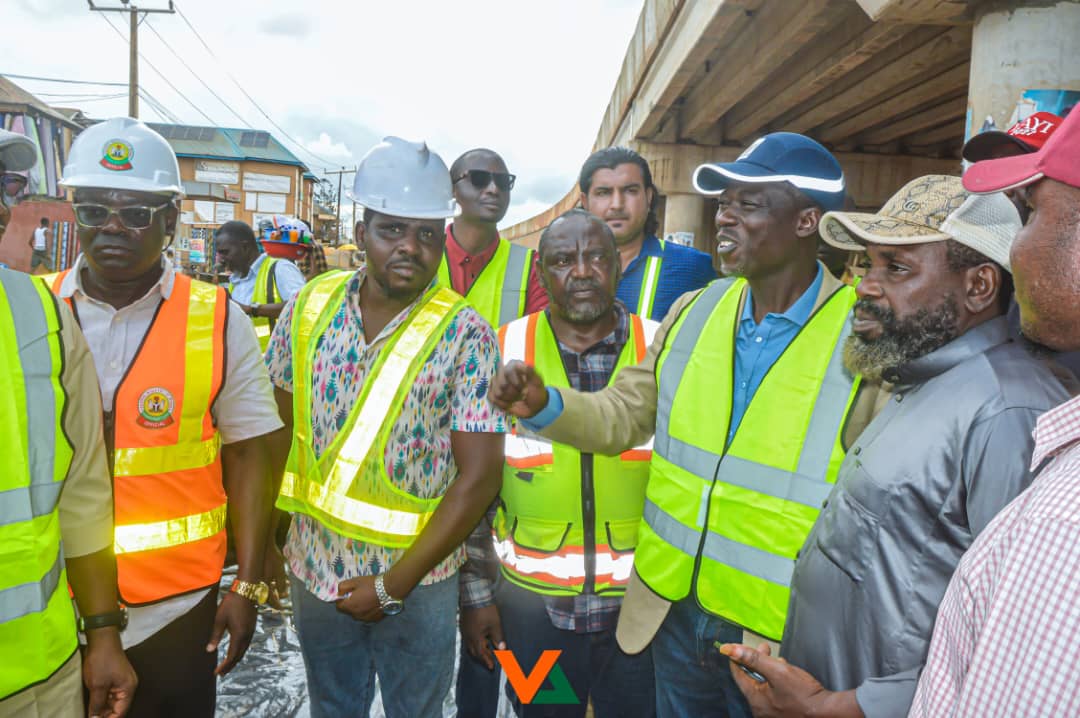
The assurance came during an inspection of the ongoing bridge project by a delegation from the ministry led by the Director of Bridges, Highways and Road Designs, Engr. Musa Saidu, acting on the directive of the Minister of Works, Engr. David Umahi, following public concerns over the quality of the project.
Addressing journalists after inspecting the bridge, Engr. Musa said the inspection confirmed that the project met all engineering standards, stressing that allegations of structural defects were unfounded and not backed by any technical evidence.
“The bridge has undergone integrity tests and passed. It is structurally stable,” he said. “No one can determine the integrity of a bridge simply by taking photographs or posting videos on social media. Engineering decisions are based on scientific tests, not assumptions.”
He maintained that the Ministry of Works would never compromise on quality, noting that the bridge was being executed in accordance with approved specifications and under strict supervision.
According to him, the quality of work carried out by the contractor is satisfactory, while only minor finishing issues identified during the inspection would be corrected before completion.
“The structural stability of the bridge is guaranteed. Heavy trucks are already moving across it, even though construction has not been fully completed. That alone demonstrates its strength,” he added.
Musa urged the public to support indigenous contractors executing government projects instead of spreading unverified allegations capable of undermining confidence in critical infrastructure.
He also warned traders and other members of the public against occupying the area beneath the bridge, describing the practice as unsafe and unacceptable.
“Construction sites are restricted areas across the world. People should not be trading or loitering beneath an active bridge project. It poses serious safety risks,” he said.
The ministry expressed confidence that the contractor had overcome earlier challenges affecting the pace of work and would deliver the project within the stipulated timeframe.
Engr. Adeleke Richard, the Federal Controller of Works, Ogun State in his remarks stated that the inspection had confirmed that the bridge construction was progressing in full compliance with the Federal Ministry of Works’ approved specifications and engineering standards, noting that the quality of work delivered by the indigenous contractor had met the ministry’s expectations.
The Federal Controller however complained that one of the major challenges slowing the pace of the project was persistent interference within the construction corridor, particularly the activities of traders operating around and beneath the bridge despite the obvious safety risks,
while asking community leaders to assist the ministry in controlling these activities.
According to him, while the approved pavement thickness is 200 millimetres, the contractor is delivering 250 millimetres, a clear demonstration of its commitment to structural integrity, saying, “the enhanced specifications would guarantee a stronger and longer-lasting infrastructure capable of serving the public safely for many years.”
Representing Laralek Construction Company, the contractor handling the project, Mr. Tope Ojo reaffirmed that the bridge was being constructed strictly in line with the approved engineering design and government specifications.
He said every structural component, including the span, bearings, beams and piers was executed according to approved drawings, with some elements exceeding the minimum design requirements.
“There is absolutely no cause for alarm. Every integrity test required for the bridge has been conducted, and all results confirmed compliance with engineering standards,” Ojo stated.
He disclosed that the tests were conducted by independent consultants rather than the construction company itself, adding that the results had been presented to relevant authorities.
According to him, officials of the Council for the Regulation of Engineering in Nigeria (COREN) also carried out an on-site technical assessment of the project and certified that the construction complied with required standards after examining all critical structural elements.
Reacting to the inspection, a member of the Oju-Ore Stakeholders Council, Comrade Akomolafe Zubair, welcomed the ministry’s intervention and expressed satisfaction with the technical assessment.
He said the ministry’s verdict had reaffirmed public confidence in the project, noting that the contractor had demonstrated compliance with government specifications.
Zubair appealed to residents of Ota and motorists using the corridor to remain patient while the remaining aspects of the project are completed, assuring that the bridge would soon be opened for full public use.

