Ogun Deep Sea Port, $10bn LNG Project Attract Fresh Investors – Abiodun
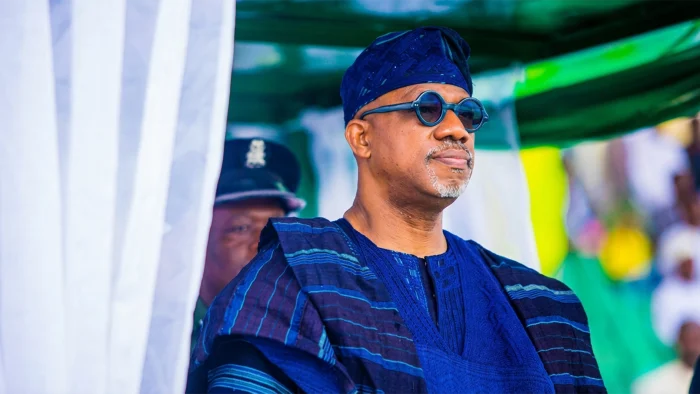
Ogun State Governor, Dapo Abiodun, says the planned $7 billion Gateway Deep Sea Port and the proposed $10 billion Ogun Liquefied Natural Gas (OgunLNG) project are attracting fresh investments and positioning the state for significant industrial and economic growth.
Abiodun disclosed this on Tuesday during a town hall meeting on the 2027–2029 Medium-Term Expenditure Framework (MTEF) and the 2027 Budget, organised by the state Ministry of Budget and Planning in Ijebu-Ode.
He said the two major projects, alongside the proposed Ogun Blue Marine and Special Economic Zone and the Federal Government’s Lagos-Calabar Coastal Highway, were creating new economic opportunities and attracting growing interest from local and international investors.
The governor described the Gateway Deep Sea Port as a major legacy project of his administration, revealing that agreements recently signed in Paris with global port operator DP World would facilitate approximately $7 billion in private-sector investment.
According to him, the agreements cover the development of the deep seaport and the Ogun Blue Marine and Special Economic Zone, with the potential to transform the state’s maritime, logistics, manufacturing and industrial sectors.
He emphasised that the projects would be financed entirely through private capital, without direct government investment.
Abiodun also highlighted the proposed $10 billion OgunLNG project, being developed with the involvement of the Nigerian National Petroleum Company Limited (NNPC), describing it as another major investment expected to strengthen the state’s economic prospects.
He added that the Lagos-Calabar Coastal Highway would improve connectivity, open new economic corridors and further enhance Ogun State’s attractiveness to investors.
The governor said the growing interest had resulted in increased enquiries from prospective investors seeking to establish businesses and take advantage of the emerging economic opportunities.
Reviewing his administration’s achievements since 2019, Abiodun said more than 1,700 kilometres of roads had been constructed or rehabilitated across the state, alongside interventions in healthcare, education, agriculture, electricity and security.
He listed the Gateway Medical Centre of Excellence, the rehabilitation of more than 1,600 public schools, the recruitment of over 6,000 teachers and support for thousands of farmers among the administration’s key achievements.
On electricity, the governor disclosed that power plants had been installed in Abeokuta, while similar facilities were planned for Ijebu-Ode and Remo to improve electricity supply, stimulate commercial activities and support industrial development.
He also highlighted road projects across Ijebu Division, including reconstruction and rehabilitation works in Oru, Awa, Ilaporu, Ago-Iwoye, Eruwon and Atan.
In Ijebu-Ode, he said the government had constructed 26 roads to improve connectivity and facilitate economic activities within communities.
Abiodun further explained that the 2027 budget would be guided by the state’s 2027–2029 MTEF, with emphasis on realistic expenditure, completion of ongoing projects, improved service delivery and investments capable of generating sustainable economic growth.
He described the town hall meeting as the final budget consultation of his administration, urging traditional rulers, community leaders, religious organisations, professional bodies and other stakeholders to contribute practical recommendations towards the state’s development priorities.
The governor assured participants that their submissions would be considered in preparing the 2027 budget, adding that proposals that could not be accommodated would be documented and transmitted to the incoming administration.
Earlier, the Chief Economic Adviser and Commissioner for Finance, Dapo Okubadejo, said the state’s development agenda remained focused on infrastructure, improved access to essential services and creating an enabling environment for businesses and individual prosperity.
Okubadejo urged residents to see governance as a shared responsibility and support efforts to ensure that public resources were deployed to projects and programmes that would deliver maximum benefits to the people.