
Truckers Allege N50,000 Charges Per Export Container At Tin Can Port
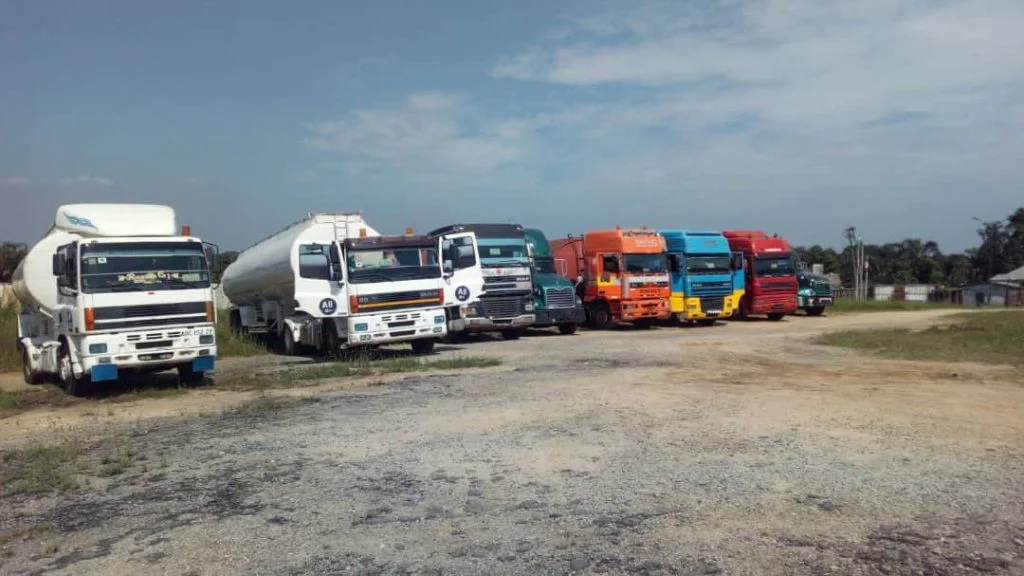
Truckers Allege N50,000 Charges Per Export Container At Tin Can Port
Export truck owners operating along the Tin Can Island Port corridor in Lagos have raised concerns over alleged multiple charges amounting to about N50,000 per container, warning that the practice could undermine Nigeria’s efforts to boost non-oil exports.
The Chairman of the Association of Container Truck Owners of Nigeria (ACTOAN), Ridwan Bello, accused the Nigerian Ports Authority (NPA) and other agencies operating along the port corridor of imposing additional burdens on truckers despite the introduction of the electronic call-up system.
Bello, who spoke in an interview with Vanguard, questioned the rationale behind the manifest requirement, arguing that it had created additional difficulties for truckers seeking access to the port with export-laden containers.
He maintained that the electronic call-up system was introduced to improve traffic management and eliminate human interference in port access, but alleged that existing procedures had continued to increase operational costs for haulage operators.
According to him, truckers are subjected to multiple payments at different stages of the export process, including an alleged N15,000 charge to facilitate the dropping of each container.
He further claimed that terminal operators sometimes demand as much as N10,000 to offload export containers, adding that the cumulative charges could reach N50,000 per container.
Bello warned that the expenses were eroding truckers’ earnings and threatening the sustainability of their businesses, particularly amid efforts to expand Nigeria’s export capacity.
He questioned how haulage operators could remain profitable under the circumstances, especially as the Federal Government continues to pursue economic diversification through increased non-oil exports.
Nigeria’s non-oil exports reportedly rose to $6.1 billion in 2025, compared with $5.46 billion in 2024, underscoring the importance of efficient and cost-effective port operations to the country’s export ambitions.
The ACTOAN chairman called on the NPA to explain the rationale behind the manifest requirement and clarify whether the electronic call-up system was still achieving its intended objectives.
He also criticised trucking associations for what he described as their silence over the alleged charges, urging industry stakeholders to address the challenges confronting operators along the port corridor.
Bello urged the relevant authorities to review the alleged charges and existing operational procedures, warning that the rising cost of moving export containers could discourage investment in the haulage sector and weaken Nigeria’s drive to grow non-oil exports.
The allegations highlight concerns over port efficiency and the cost of logistics, although the NPA and other agencies mentioned were not quoted as responding to the claims in the report.