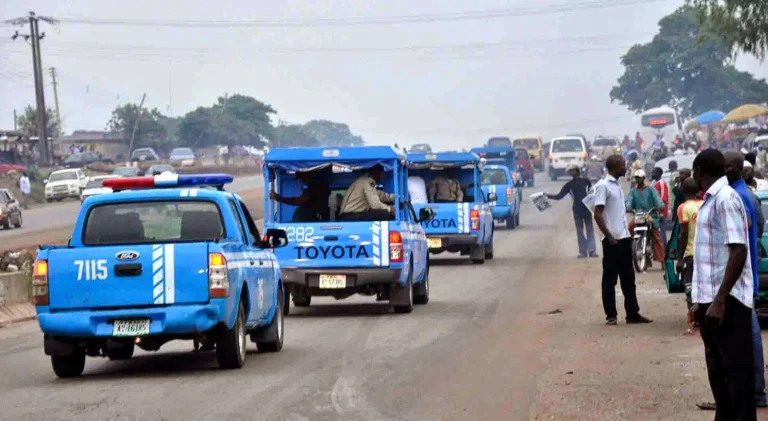
Again, Gridlock Strands Motorists On Kaduna-Abuja Highway
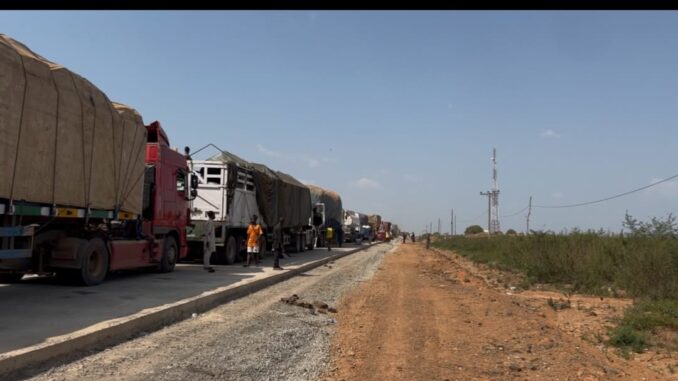
Motorists and passengers have been stranded for several hours following another major traffic gridlock on the Kaduna-Abuja highway, particularly around the Katari and Gidan Busa axes, amid ongoing reconstruction works and recurring road accidents.
The latest disruption occurred on Sunday, November 8, and Monday, November 9, 2026, leaving hundreds of travellers struggling to continue their journeys between Kaduna and Abuja.
On Sunday, three heavily loaded containers reportedly fell on the highway around 3pm, obstructing traffic and triggering a massive backlog of vehicles.
The situation worsened on Monday following multiple accidents involving articulated vehicles around Gidan Busa, shortly before Katari, further disrupting movement along the busy corridor.
Some travellers reportedly spent several hours in traffic, with others missing important appointments, business engagements and scheduled deliveries in Abuja.
A fashion designer, Sarah Monday, who was travelling to Abuja for a contract meeting, told the News Agency of Nigeria (NAN) that she missed the engagement because of the prolonged gridlock.
Other motorists expressed frustration over the recurring traffic congestion, with some reportedly turning back towards Kaduna while considering alternative routes, including the Kachia-Bwari corridor.
The Kaduna-Abuja highway is a major transport link connecting the Federal Capital Territory with Kaduna and other parts of north-western Nigeria. It serves thousands of commuters, commercial vehicles and heavy-duty trucks daily.
However, sections around Katari, Jere and Gidan Busa have continued to experience severe congestion, largely attributed to ongoing construction activities, restricted passages and frequent accidents involving articulated vehicles.
The reconstruction of the Abuja-Kaduna highway was initially awarded to Julius Berger Nigeria Plc in December 2017, with construction commencing in 2018.
The project subsequently suffered delays following disagreements over its cost and execution terms. In November 2024, the Federal Government terminated Julius Berger’s contract for the Abuja-Kaduna section after negotiations over revised contract terms broke down.
The government later initiated a new arrangement to continue the reconstruction as part of the wider 375-kilometre Abuja-Kaduna-Zaria-Kano highway project.
Speaking at the flag-off ceremony for the project in Kano on October 21, 2026, the Minister of Works, David Umahi, disclosed that 81 kilometres of reinforced concrete pavement along the Abuja-Jere section in Kaduna State had been completed.
Umahi also said work on Section Two, covering 164 kilometres, had reached 148 kilometres, leaving less than 20 kilometres outstanding.
He added that President Bola Tinubu had directed the installation of solar-powered streetlights along the highway to improve visibility and enhance motorists’ safety, particularly at night.
The Federal Government has indicated December 2026 as the completion target for the wider project.
Meanwhile, concerns have continued over the frequency of accidents involving heavy-duty vehicles along the corridor.
A road safety official quoted in a Monday report by NAN claimed that at least 20 accidents involving long vehicles occur on the route monthly, with fatalities and incidents involving livestock also recorded.
The Federal Road Safety Corps (FRSC) had previously identified the Katari-Jere axis as a major congestion point and advised motorists to consider alternative routes during periods of severe traffic.
During the 2026 Eid-el-Kabir travel period, the corps recommended the Kachia-Maraban Kubacha-Jere-Bwari-Dutse route for motorists travelling between Kaduna and Abuja.
It attributed the congestion to increased travel activities, ongoing construction, rainfall and poor driving practices, including dangerous overtaking and failure to observe lane discipline.
The recurring gridlock has also raised concerns over its economic implications, particularly for businesses, transport operators and traders who depend on the highway for the movement of goods and services.
Prolonged delays increase fuel consumption, disrupt delivery schedules and expose passengers, livestock and perishable goods to additional risks.
Motorists have therefore called for improved traffic management around construction zones, while stakeholders have emphasised the need for properly maintained diversions and prompt responses to accidents and broken-down vehicles.
There have also been calls for stronger enforcement against dangerous overtaking, driving against traffic and indiscriminate use of road shoulders, which often worsen congestion.
With the December 2026 completion target approaching, the Federal Government faces growing pressure to complement its reported construction progress with effective traffic management measures to reduce the hardship experienced by road users.
The recurring gridlocks, particularly around Katari, Jere and Gidan Busa, have reinforced concerns that completing the highway is not the only priority, as motorists also require safer and more reliable journeys while construction continues.