AfDB, Germany Partner To Boost Africa’s Railway Development
The African Development Bank Group (AfDB) has partnered with Germany to strengthen railway infrastructure across Africa, reduce transportation costs and improve regional connectivity and economic integration.
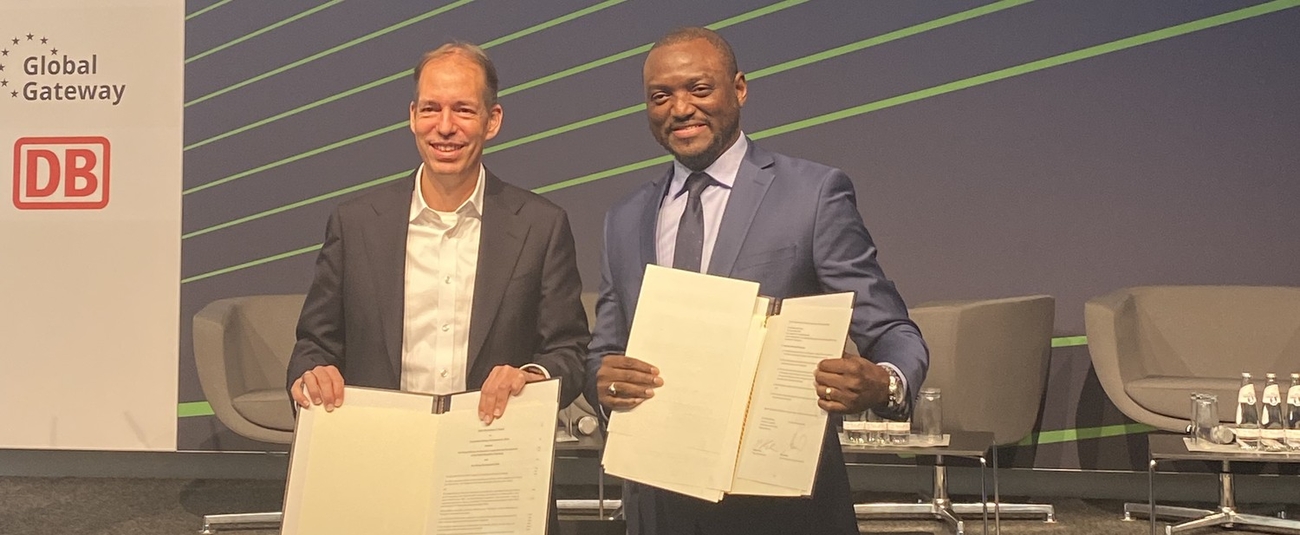
The partnership was formalised through a letter of intent signed by the AfDB and Germany’s Federal Ministry for Economic Cooperation and Development (BMZ) during the inaugural African European Industry Dialogue on Railways, held as part of the InnoTrans International Trade Fair for Transport Technology.
The agreement was signed by the AfDB’s Director for Infrastructure and Urban Development, Mike Salawou, and BMZ’s Deputy Director General for Economic Cooperation, Michael Krake.
Under the agreement, both institutions will collaborate on improving cross-border railway interoperability, promoting low-carbon transport solutions and supporting sustainable transport policies across the continent.
The partnership will also focus on skills transfer, vocational training and the creation of sustainable employment opportunities to strengthen Africa’s railway workforce.
As part of the initial phase, the two organisations will undertake a joint feasibility study for an African Rail Competence Center, to be implemented by the German development agency, Deutsche Gesellschaft für Internationale Zusammenarbeit (GIZ) GmbH. The centre is expected to bring together innovation, technical training and expertise to support the modernisation and expansion of railway networks across Africa.
Speaking at the event, Salawou highlighted several railway projects supported by the AfDB, including the Lobito Corridor, the Standard Gauge Railway programme in East Africa, the Nacala Corridor, Algeria’s North-South Rail Corridor, Morocco’s high-speed rail system and urban railway projects in Senegal and Nigeria.
He noted that Africa’s railway network accounts for only eight to 10 per cent of the global total, despite increasing demand for cross-border freight and passenger transportation driven by the African Continental Free Trade Area (AfCFTA).
According to him, the continent’s market of more than 1.4 billion people presents significant opportunities for railway development, provided countries address infrastructure gaps and improve coordination across national borders.
Salawou outlined five priorities for the sector: developing a continental railway market driven by AfCFTA, implementing reforms to encourage a shift towards rail transport, harmonising technical standards, attracting private investment through appropriate financing mechanisms and building the expertise required to operate railway networks efficiently.
“Building a railway is half the job,” he said, stressing that effective operation and maintenance remain critical to the success of railway investments.
In his remarks, Krake reaffirmed Germany’s commitment to supporting Africa’s development through stronger regional connectivity and sustainable economic growth.
He said the partnership would promote practical cooperation in railway interoperability, skills development and other areas necessary to build a stronger railway sector.
Salawou also urged African governments and railway authorities to establish clear development plans, conduct credible feasibility studies, implement reforms early and provide regulatory certainty to attract investors.
He called on European railway companies to prioritise long-term partnerships, local content development and skills transfer rather than focusing solely on equipment supply.
He further encouraged financiers to participate from the project preparation stage, adding that the AfDB would support railway development through guarantees, blended finance and technical assistance.
The partnership is expected to contribute to the development of more integrated railway systems, facilitate trade and strengthen economic cooperation among African countries.