Apapa Port Access Road Handles Over 7,000 Trucks Daily – NPA
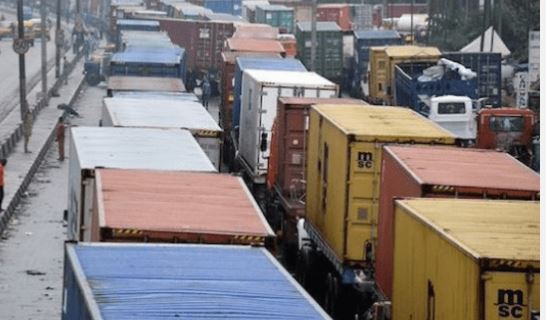
The Nigerian Ports Authority (NPA) has disclosed that the Apapa port access road in Lagos handles more than 7,000 trucks daily, nearly three times its designed capacity of approximately 2,400 trucks.
The Managing Director of the NPA, Dr Abubakar Dantsoho, made this known while speaking at the African Ports Conference in Casablanca, Morocco, where he highlighted the challenges facing Nigeria’s maritime sector and the need for coordinated reforms to improve port efficiency.
According to Dantsoho, the excessive volume of truck traffic has contributed to congestion, prolonged delays and reduced reliability across port operations, underscoring the importance of investments in port infrastructure, transport corridors and digital systems.
He recalled that cargo previously remained at Lagos ports for as long as three weeks, adding that the introduction of operational reforms had helped address some of the longstanding challenges.
Dantsoho explained that the NPA introduced the Electronic Truck Call-Up System, known as Eto, to tackle gridlock along port access corridors. He also noted that the National Single Window had gone live, alongside a beta version of the Port Community System, to improve coordination among the Nigeria Customs Service, terminal operators, shipping lines and regulatory agencies.
The NPA chief said the reforms were yielding encouraging results, citing Nigeria’s improved performance in the World Bank’s Container Port Performance Index 2025.
He stated that Tin Can Island Port ranked 10th, while Apapa Port placed 12th among the world’s most improved ports in the index released in June 2026.
Dantsoho further disclosed that Nigeria’s cargo throughput rose by 24.8 per cent to 129.3 million metric tonnes in 2025, reflecting improvements in port operations and cargo handling.
Despite the progress, he acknowledged that the transformation of Nigeria’s ports remained a work in progress, stressing that the development of reliable digital infrastructure must precede the wider deployment of artificial intelligence in port operations.
According to him, digitalisation provides the information required for effective decision-making, while artificial intelligence can help convert such information into more efficient operational outcomes.
He also emphasised the need to incorporate cybersecurity measures into infrastructure projects from the design stage, rather than introducing them after systems have been deployed.
The NPA managing director warned that African ports could not effectively tackle cybersecurity threats and operational inefficiencies through isolated national efforts, given the interconnected nature of maritime trade routes, shipping schedules and cargo corridors.
He explained that disruptions at one port could affect other ports and inland destinations, particularly along major regional trade routes.
Using the Abidjan–Lagos corridor as an example, Dantsoho noted that vessel delays could disrupt subsequent port calls, while cargo destined for landlocked countries such as Niger, Chad and Mali depended on efficient connections between seaports, transport corridors and border facilities.
He cautioned that modernising port systems independently without common standards could create new forms of digital fragmentation instead of eliminating existing operational barriers.
As president of the Port Management Association of West and Central Africa, Dantsoho proposed four priorities for strengthening cooperation among member ports.
These include sharing cyber threat intelligence through designated contact points and timely security alerts, developing common data standards to enable different port platforms to exchange essential information, benchmarking port performance and strengthening professional training through regional collaboration.
He maintained that stronger regional cooperation and coordinated digital development would be critical to improving port efficiency, protecting maritime infrastructure and supporting trade across West and Central Africa.