Oando Begins Full Deployment Of Electric Buses In Lagos After Successful Pilot
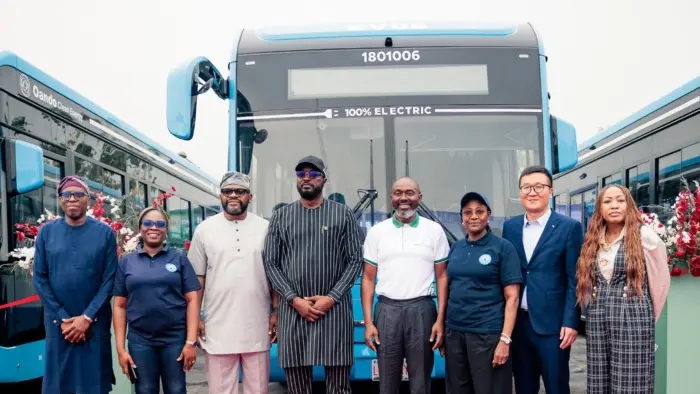
Oando Clean Energy Limited (OCEL) has commenced the full deployment of electric buses in Lagos following the successful completion of its pilot scheme, which reportedly saved about 216,000 litres of diesel and covered 433,000 kilometres.
The deployment, carried out in partnership with the Lagos Metropolitan Area Transport Authority (LAMATA) and the Lagos State Government, marks the transition of the company’s electric mobility initiative from the pilot stage to full-scale implementation.
During the pilot phase, the two electric buses transported approximately 788,000 passengers, covering 433,000 kilometres while avoiding the consumption of about 216,000 litres of diesel, with almost zero operational downtime.
In the first nine months of 2026 alone, the buses recorded more than 212,000 passenger journeys, with an average capacity utilisation of 73 per cent.
Speaking at the launch ceremony, Lagos State Commissioner for Transportation, Oluwaseun Osiyemi, said the initiative aligned with the state’s ambition to achieve net-zero emissions by 2050.
He noted that the introduction of electric buses would help reduce transportation-related emissions, improve air quality and strengthen the state’s public transportation system.
Similarly, the Managing Director of LAMATA, Abimbola Akinajo, said the more than two years of operational experience gathered during the pilot phase had provided valuable insights into the viability of electric mobility in Lagos.
She stressed that the success of the initiative would be determined not merely by the number of buses deployed but by the quality of services delivered to commuters and its overall impact on residents.
The President and Chief Executive Officer of Oando Clean Energy Limited, Ademola Ogunbanjo, said the company had acquired the operational experience needed to expand the initiative, adding that its objective was to demonstrate the efficiency and sustainability of electric transportation in Nigeria.
Ogunbanjo disclosed that the company was developing a comprehensive electric mobility ecosystem, including charging infrastructure, after-sales services, technical training, spare parts supply and local vehicle assembly.
He explained that the development would help Nigeria move beyond importing electric vehicles towards building a domestic electric mobility industry.
Meanwhile, the Bank of Industry reaffirmed its support for investments in cleaner public transportation, describing the initiative as an important contribution to economic growth, improved mobility and national competitiveness.
The Country Account Manager of Yutong West Africa, Damian Li, also pledged the company’s support through charging facilities, after-sales services, mechanic training and spare parts supply.
The electric buses, manufactured by Yutong, are equipped with air conditioning, onboard Wi-Fi, 360-degree cameras and wheelchair accessibility, alongside priority seating for elderly passengers.
Each bus has a passenger capacity of 79, comprising 39 seated and 40 standing passengers.
The new fleet is expected to commence commercial operations in the fourth quarter of 2026, with LAMATA overseeing its operations on behalf of the Lagos State Government.