Truckers Blame Poor Scheduling, Weak Coordination For Apapa Port Gridlock
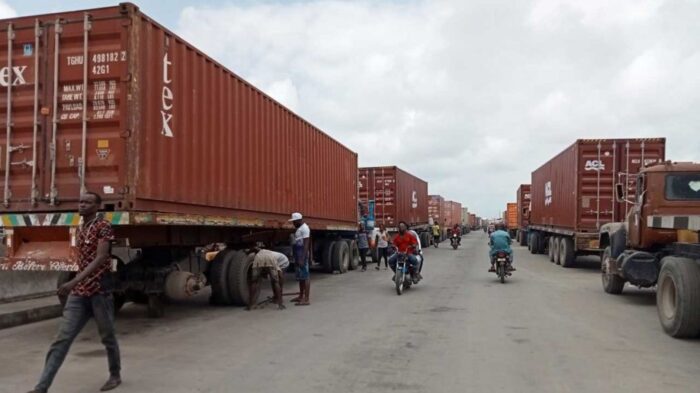
Truck owners have blamed poor scheduling, weak coordination among port stakeholders and inefficiencies in the truck call-up system for persistent congestion around the Apapa and Tin Can Island ports in Lagos.
The Association of Maritime Truck Owners (AMATO) said addressing the recurring gridlock requires better coordination of cargo readiness, truck staging, call-up authorisation, terminal capacity, empty-container returns and port gate operations, rather than focusing solely on controlling the number of trucks accessing the ports.
The National President of AMATO, Remi Ogungbemi, made this known at the Lagos Chamber of Commerce and Industry (LCCI) Freight Forwarders Trade Group Strategic Stakeholders’ Engagement. He was represented at the event by the association’s National Secretary-General, Mohammed Sani.
Ogungbemi said the Nigerian Ports Authority (NPA) should coordinate and supervise port operations, while the Truck Transit Park (TTP) operator must maintain an accountable call-up platform and terminal operators provide accurate information on their cargo-receiving capacity.
He also called on government agencies to ensure consistent enforcement of port access regulations, while shipping companies, freight forwarders and truck owners adhere to proper scheduling and approved procedures.
The AMATO president expressed concern over trucks approaching port access roads without valid call-up authorisation, complete documentation or the required NPA Minimum Safety Standard sticker, stressing the need for proper investigation and verification.
He maintained that the electronic call-up system should go beyond issuing entry tickets to verifying truck identities, confirming their presence at approved parks or pre-gates, establishing queue positions and authorising movement based on terminal readiness.
According to him, every truck must meet the necessary identity, destination, safety and movement-authorisation requirements before being allowed into the port environment.
He further warned that releasing trucks without considering terminal receiving capacity only transfers congestion from designated parks to access roads, bridges and adjoining corridors.
To address this, he proposed a batch-release system that would regulate truck movements according to the number of vehicles individual terminals can accommodate within a specified period.
Ogungbemi also advocated the introduction of electronic truck e-tags and integrated movement manifests to strengthen vehicle identification, improve call-up verification and prevent unauthorised access.
On empty-container returns, he said delays in the process increase operational costs, reduce truck availability and worsen congestion.
He urged the TTP operator, shipping companies, terminal operators and bonded terminals to establish a coordinated electronic system that identifies designated container-return locations, confirms available capacity and communicates return arrangements before trucks are dispatched.
The association also warned that inefficiencies in the call-up system unfairly disadvantage compliant operators, leading to prolonged delays, idle vehicles, additional driver expenses, lost contracts and reputational damage.
Ogungbemi insisted that operators who circumvent approved procedures should not enjoy advantages over those who comply with established regulations, calling for fairness, transparency and consistent enforcement across the sector.
He noted that the financial and operational consequences of port delays extend beyond truck owners to affect the entire maritime value chain, the national economy and Nigeria’s competitiveness in international trade.
AMATO consequently proposed the establishment of a joint Port Traffic and Terminal Efficiency Working Group, to be coordinated by the NPA and comprising relevant government agencies, TTP operators, terminal operators, shipping companies, bonded terminals, freight forwarders and recognised transport associations.
The association said the proposed framework would improve accountability, strengthen operational coordination and provide a more sustainable solution to congestion at the Apapa and Tin Can Island ports.
The development comes amid concerns over the growing pressure on Lagos port access roads. NPA Managing Director, Dr Abubakar Dantsoho, had previously disclosed that cargo dwell time at the ports once extended to three weeks, while the Apapa access road, originally designed to accommodate about 2,400 trucks daily, was handling more than 7,000 trucks.