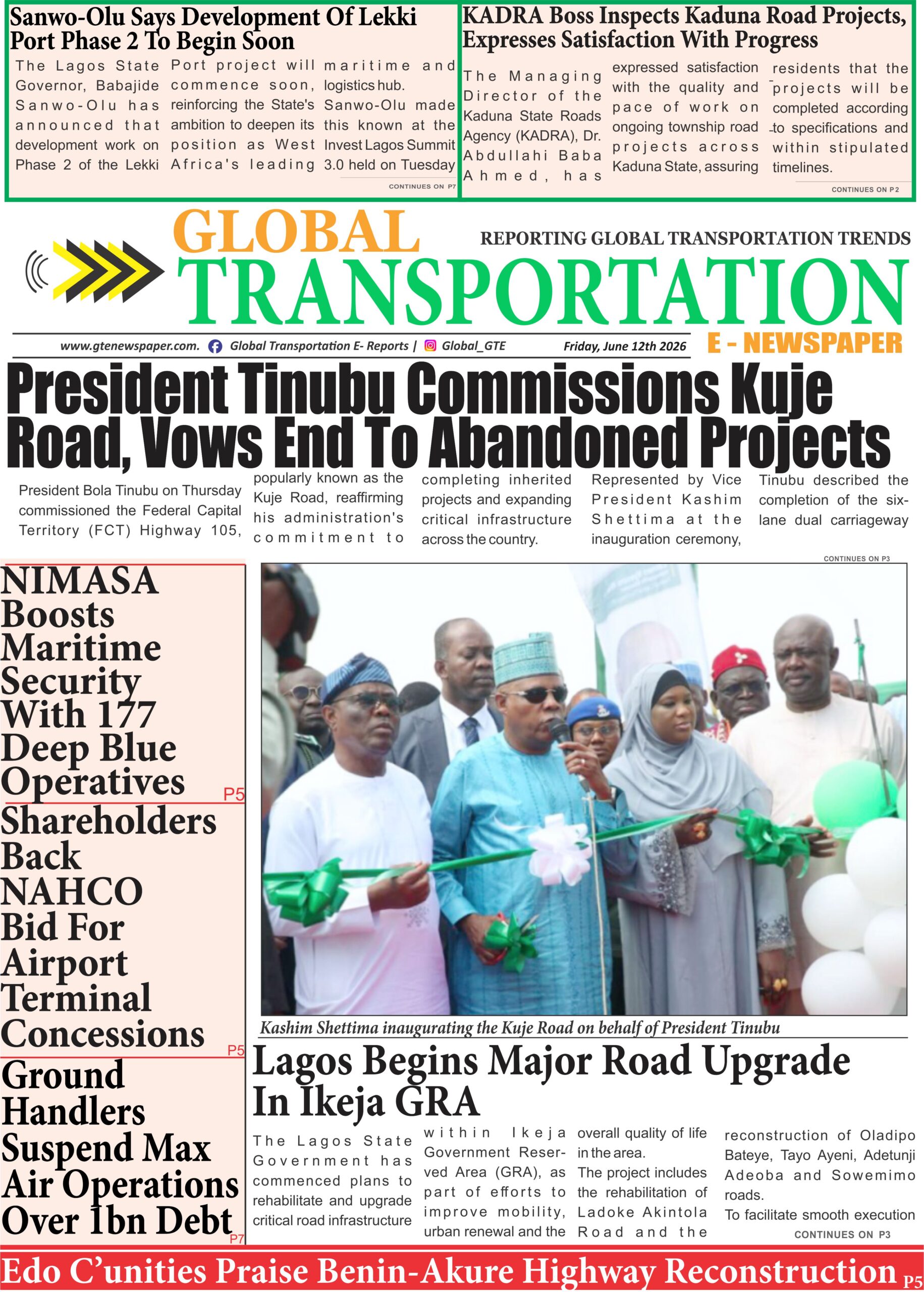
NIMASA Boosts Maritime Security With 177 Deep Blue Operatives
The Nigerian Maritime Administration and Safety Agency (NIMASA) has strengthened the country’s maritime security architecture with the graduation of 177 new personnel under the Deep Blue Maritime Security Unit, as Nigeria intensifies efforts to position itself as West Africa’s leading maritime hub.
The newly trained operatives, drawn from the Armed Forces, Nigeria Police Force and Department of State Services, completed specialised training in maritime security operations, intelligence gathering, rapid response, helicopter operations, vessel boarding, medical evacuation and drone surveillance.
Speaking during the graduation ceremony at Navy Town, Ojo, Lagos, NIMASA Director-General, Dr Dayo Mobereola, said the graduates comprise 33 special mission vessel officers, 14 vessel engineers, 107 intervention boat drivers, technicians and boarding team members, as well as 23 helicopter crew personnel.
According to him, the training is designed to enhance operational efficiency, intelligence coordination and rapid-response capabilities across Nigeria’s maritime domain.
The ceremony featured a simulated anti-piracy rescue operation in which Deep Blue operatives demonstrated coordinated air and sea interventions, including vessel interception, helicopter deployment and casualty evacuation.
Mobereola highlighted the achievements of the Deep Blue Project, noting that Nigeria has maintained four years of piracy-free waters, leading to reduced war-risk insurance premiums and renewed international confidence in the country’s maritime sector.
“It is important to state that for the last four years, Nigeria has maintained an impressive record of zero piracy incidents through the instrumentality of the Deep Blue Project,” he said.
Launched in June 2021, the Deep Blue Project—officially known as the Integrated National Security and Waterways Protection Infrastructure—was introduced to combat piracy and other maritime crimes in the Gulf of Guinea, previously regarded as one of the world’s most dangerous shipping routes.
Before the project’s implementation, maritime piracy reportedly cost Nigeria about $783 million annually, while the wider Gulf of Guinea region lost an estimated $2 billion each year through disrupted trade, increased insurance costs and security expenditures.
NIMASA said the initiative has contributed significantly to a reduction of more than 90 per cent in piracy incidents across the Gulf of Guinea.
The project combines advanced surveillance technology, artificial intelligence, maritime communication systems and specialised security assets coordinated through its Command, Control, Communication, Computer and Intelligence (C4i) Centre.
The security infrastructure includes special mission aircraft, unmanned aerial vehicles, mission vessels, interceptor boats and armoured coastal patrol vehicles operated by over 600 trained personnel.
The agency noted that Nigeria was removed from the International Maritime Bureau’s list of piracy-prone nations in 2022 and was subsequently delisted from the International Bargaining Forum’s unsafe waters register in 2023.
NIMASA also disclosed that Nigeria accounted for more than 46 per cent of all port calls within the Gulf of Guinea in 2025, reflecting growing confidence in the country’s maritime environment.
Beyond security gains, the Federal Government is pursuing major infrastructure investments to expand port capacity and strengthen Nigeria’s position as a regional maritime hub. These include a $1 billion modernisation and digitisation project for the Apapa and Tin Can Island ports, alongside plans to develop five new deep seaports across the country.
Representing the Chief of Naval Staff, the Flag Officer Commanding Western Naval Command, Rear Admiral Abubakar Mustapha, commended the collaboration between NIMASA, the Nigerian Navy and other security agencies, describing the Deep Blue Project as a model of inter-agency cooperation.
He stressed that evolving maritime threats require sustained professionalism, vigilance and capacity building among maritime security personnel.
Head of the Deep Blue Project, Mrs Gladys Owolabi, said the initiative has significantly improved safety within Nigeria’s waters and across the Gulf of Guinea, creating an environment where maritime trade and investment can thrive.
She added that continuous training, maintenance of assets and effective coordination remain central to the project’s long-term sustainability.
Stakeholders believe the improved security environment, coupled with ongoing port expansion projects, could help Nigeria attract more shipping traffic, reduce operational costs and strengthen its ambition of becoming the leading maritime gateway in West Africa.