Lagos Residents Grapple With Flooding, Gridlock As Rains Drive Up Transport Costs
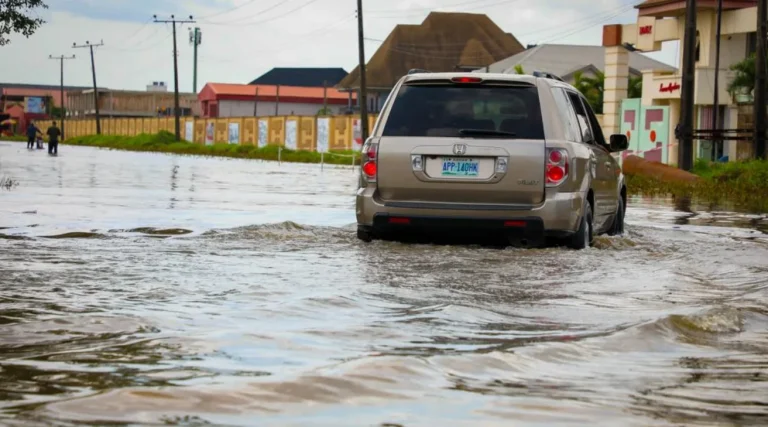
Lagos residents are adjusting their daily routines as persistent rainfall continues to trigger flooding, worsen traffic congestion and increase transportation costs across the state.
Many commuters say they now leave home much earlier to avoid being trapped in gridlock, while traders and students are taking extra measures to protect their goods and belongings from water damage.
The situation reflects the 2026 Seasonal Climate Prediction by the Nigerian Meteorological Agency (NiMet), which forecasts a longer-than-normal rainy season and delayed cessation of rainfall in Lagos.
An Aguda resident, Shola Opeyemi, said she now carries rain boots and a raincoat in her backpack daily because of the unpredictable weather. According to her, getting caught in the rain often doubles her transportation expenses.
Similarly, Cecilia Uwadi, who lives in Ogba, said she leaves home as early as 4:00 a.m. and sometimes remains at work until late in the evening to avoid severe traffic. She added that prolonged congestion during rainfall has significantly increased her fuel consumption.
A Mafoluku resident, Timothy, said his daily transport fare rises from about N2,000 to more than N3,000 whenever it rains, placing additional pressure on his already stretched monthly budget.
While commuters struggle with rising costs and delayed movement, some traders say the rainy season has boosted demand for weather-related products.
An umbrella seller at Ojota, Adewunmi Yusuf, said sales increase sharply during periods of heavy rainfall, with commuters rushing to purchase umbrellas during morning and evening rush hours.
A raincoat trader in Oshodi, Nkiru Adedeji, also reported increased patronage, particularly for disposable emergency raincoats, which she said are affordable and popular among commuters. However, she noted that severe flooding can discourage customers from visiting markets, affecting overall sales.
At Mile 12 Market, trader Temitope Alakija said sudden downpours have made it difficult to leave children in charge of shops, as goods can easily be damaged by rain. She added that prolonged rainfall often keeps customers away, resulting in poor sales.
Students have also been affected. A University of Lagos student, Chikaodinaka Agbo, said she now stores her textbooks and important documents in waterproof coverings to prevent damage from flooding and leaks.
Despite the varying challenges, residents say adapting to the prolonged rainy season has become unavoidable, with many altering their schedules, spending more on transportation and taking extra precautions to protect their livelihoods and personal belongings.