FG Considers Diverting Heavy-Duty Trucks To Second Niger Bridge Over Gridlock
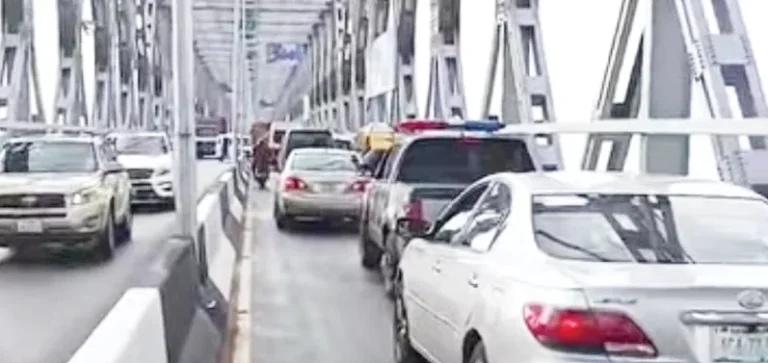
The Federal Government is considering diverting heavy-duty vehicles and trucks from the First Niger Bridge to the Second Niger Bridge as part of measures to ease persistent traffic congestion on the busy route linking Onitsha, Anambra State, and Asaba, Delta State.
The Anambra State Federal Controller of Works, Timothy Emenike, disclosed this in an interview, noting that the government was also considering installing barriers at both ends of the First Niger Bridge to restrict heavy-duty trucks from accessing the facility.
The proposed measure follows persistent traffic gridlock since the First Niger Bridge was reopened on October 15, after being temporarily shut down on September 7, 2026, over severe structural vandalism.
The Minister of Works, Dave Umahi, had ordered the closure following the discovery of missing bolts, cut steel components and damaged expansion-jointed steelwork during an inspection.
Although the bridge was subsequently reopened with new road demarcations and concrete median barriers, the modifications have reportedly narrowed the available lanes, making it difficult for motorists to manoeuvre whenever vehicles break down.
Motorists and commuters have complained that broken-down trailers and heavy-duty trucks frequently obstruct traffic, leaving road users stranded for several hours.
Speaking on the situation, Emenike said the ministry was exploring various measures to improve traffic flow, particularly ahead of the Yuletide season.
He explained that the new demarcations were designed to improve movement and that preliminary assessments showed that a heavy-duty truck and a smaller vehicle could pass simultaneously on a lane, although two heavy-duty trucks could not.
According to him, some motorists also contribute to the congestion by failing to properly move their faulty vehicles away from the carriageway.
Emenike said, “The gridlock on the First Niger Bridge is noted and the ministry is exploring a lot of measures to ensure ease of traffic, especially as we approach the Yuletide season.”
He added that diverting heavy-duty trucks to the Second Niger Bridge would provide more space for other vehicles and improve traffic movement, describing the alternative bridge as sufficiently wide to accommodate the trucks.
However, motorists have expressed mixed reactions to the proposed measures, with some blaming the persistent congestion on the concrete barriers and narrowed lanes introduced during the recent modifications.
A driver, Emeka, argued that the single-lane arrangement made it almost impossible for other vehicles to manoeuvre whenever a car, bus or truck developed a fault.
He also faulted the authorities for failing to provide towing vehicles at both ends of the bridge, despite earlier assurances that such facilities would be made available to promptly remove broken-down vehicles.
Another truck driver, Sanni, urged his colleagues to ensure their vehicles were in good working condition before embarking on journeys across the bridge.
He, however, maintained that the government should provide towing vans to facilitate the swift removal of faulty vehicles and prevent prolonged traffic disruptions.
Similarly, a civil servant, Amaka, described the new demarcation as a positive development aimed at discouraging reckless driving but called for additional measures to address the resulting congestion.
She supported the proposed restriction of heavy-duty trucks from the First Niger Bridge, noting that diverting them to the Second Niger Bridge could help prevent further gridlock.
The Federal Government is expected to continue exploring traffic management options to ensure smoother movement across the two bridges, particularly as passenger and commercial traffic increases during the festive season.