

FG Warns Seaport Employers Against Neglecting Dockworkers’ Welfare
The Federal Government on Thursday declared that it would not tolerate any employer that fails to prioritise the welfare, safety and wellbeing of dockworkers at the ports.
This is even as stakeholders in the maritime sector called for maritime workers to be trained and prepared towards a sustainable port transition.
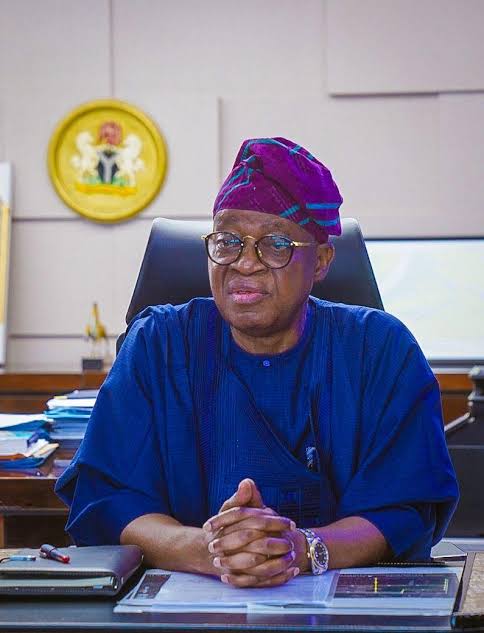
Minister of Marine and Blue Economy, Adegboyega Oyetola, who was represented by the General Manager, Corporate Affairs, Nigerian Ports Authority (NPA), Mr Ikechukwu Onyemekara, issued the warning at the 2026 Dockworkers’ Day organised by the Shipping Correspondents Association of Nigeria (SCAN) in Lagos.
Speaking on the theme, “Green Ports: Sustainable Practices for Dockworkers,” Oyetola described dockworkers as the backbone of port operations and critical to the growth of Nigeria’s marine and blue economy.
He said: “The Federal Government will not tolerate any employer of dock labour who fails to place the welfare, safety and wellbeing of workers at the centre of their operations.
“Employers must comply with all applicable labour regulations, provide safe working environments, ensure the use of appropriate safety equipment, support skills development and uphold the rights and dignity of every dockworker.”
According to the minister, the era when workers were treated as expendable assets has no place in Nigeria’s maritime industry.
Oyetola said Nigeria could not afford to be left behind as ports across the world embrace cleaner technologies, improved energy efficiency and environmentally sustainable operations, and as such sustainable port operations can only be achieved when workers are protected, respected and empowered.
He noted that ongoing port rehabilitation and modernisation projects across the country present an opportunity to build greener and more competitive ports.
In his keynote address, the President of the Nigerian Chamber of Shipping, Aminu Umar, who was represented by the Chamber’s Director-General, Mrs Vivian Chimezie-Azubuike, said the ongoing port modernisation programme should be used as a platform to transform the country’s ports into sustainable and technology-driven facilities capable of competing globally.
Umar noted that sustainability had become a major determinant of investment decisions, trade competitiveness and operational efficiency across the maritime industry.
According to him, ports of the future would be defined not only by infrastructure but by people, particularly dockworkers who remain central to port operations.
He urged stakeholders to prioritise energy-efficient infrastructure, electrified cargo handling equipment, renewable energy integration, smart port technologies, digital systems, environmental monitoring and improved occupational safety standards.
“If we fail to integrate sustainability into current rehabilitation projects, we risk creating infrastructure that may become obsolete in an increasingly carbon-conscious global economy,” he warned.
Also speaking, the immediate past President-General of the Maritime Workers Union of Nigeria (MWUN) and Deputy President of the Nigeria Labour Congress (NLC), Adewale Adeyanju, said there could be no truly sustainable port without sustainable dockworkers.
Adeyanju cautioned that the global shift towards greener ports must not result in job losses or exclusion of workers from decision-making processes.
“The transition to greener ports must not become an excuse for job losses, poor working conditions or the marginalisation of workers,” he said.
He advocated a “just transition” that would balance environmental sustainability with workers’ welfare through training, skills development, job protection, social dialogue and safe working conditions.
Also speaking, the Executive Secretary and Chief Executive Officer of the Nigerian Shippers’ Council, Barr. Pius Akutah, represented by Deputy Director, Trade Services, Hanna Adaba, said sustainability has become a global imperative and Nigeria must ensure its ports are not left behind.
“The Nigerian Shippers’ Council remains committed to supporting initiatives aimed at improving the welfare, safety and working conditions of maritime workers while promoting sustainable development across the port ecosystem,” he said.
Also speaking, the President of the National Association of Stevedoring Operators (NASO), Bolaji Sunmola, said the global maritime industry had reached a turning point following the International Maritime Organisation’s greenhouse gas reduction targets.
According to him, Nigeria’s transition to green ports must reflect local realities, including infrastructure deficits, congestion challenges and financing constraints.
Sunmola argued that one of the most effective green port initiatives available to Nigeria today is improved operational efficiency.
“When vessels spend less time waiting at anchorage and trucks spend fewer days idling at port gates, emissions are automatically reduced. The carbon that is never emitted is the greenest of all,” he said.
He urged government agencies to ensure that environmental performance indicators are embedded in ongoing port modernisation programmes, adding that green practices should not become an unfunded burden on operators.
Sunmola also called for access to financing to support the upgrade of cargo handling equipment and other port infrastructure needed for cleaner operations.
He further stressed that environmental sustainability must go hand in hand with improved welfare for dockworkers.
“A green port that exposes workers to unsafe conditions and poor welfare is a contradiction. Sustainability must also include the sustainability of livelihoods,” he said.
In his welcome address, the President of SCAN, Moses Ebosele, said the theme of the event was timely as the global maritime industry continues to embrace environmentally responsible operations aimed at reducing carbon emissions and improving efficiency.
Ebosele described dockworkers as the backbone of port operations, noting that while the industry pursues greener ports, workers must be equipped with adequate training, technology and welfare support.
He also commended the Federal Government’s planned $1 billion port development initiative targeted at revitalising Apapa and Tin Can Island ports.
“The proposed modernisation of our ports will not achieve its desired objectives without sustained investment in human capital development, continuous training and improved welfare packages for workers,” he said.

