FRSC Blames Speeding For Tanker Fire Under Lagos’ Otedola Bridge
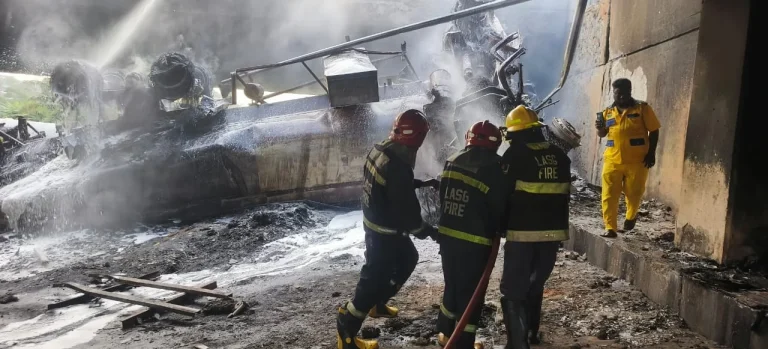
The Federal Road Safety Corps (FRSC), Lagos Sector Command, has attributed a tanker crash and subsequent fire beneath Otedola Bridge on the Lagos-Ibadan Expressway to excessive speeding.
The incident, involving a diesel-laden tanker, occurred at about 4:10 p.m. on Monday along the outward section of the expressway, triggering a fire beneath the bridge and prompting an emergency response from relevant agencies.
In a statement issued by the Sector Public Education Officer, Elizabeth Jayeola, the FRSC said preliminary findings identified speeding as the reported cause of the crash.
According to the statement, the corps received a report of the incident at 4:15 p.m., while its rescue unit arrived at the scene at 4:20 p.m. to support emergency operations.
Two adult male occupants of the tanker sustained injuries and were evacuated to the Lagos State Accident and Emergency Centre for medical attention. No fatalities were recorded in the initial crash report.
The FRSC disclosed that its personnel collaborated with the Lagos State Fire and Rescue Service, the Lagos State Traffic Management Authority (LASTMA), the police and other emergency responders to contain the fire, manage traffic and prevent further danger to motorists and nearby infrastructure.
The corps noted that the incident posed a serious threat because of the involvement of a petroleum-product tanker beneath a major expressway bridge.
Reacting to the incident, the Lagos Sector Commander of the FRSC, Corps Commander Kehinde Hamzat, warned that speeding remained a significant threat to road safety, particularly when heavy-duty vehicles transporting hazardous materials were involved.
Hamzat stressed that tanker drivers must maintain appropriate speeds, keep safe following distances, ensure their vehicles are properly maintained and comply strictly with traffic regulations.
He explained that the weight of articulated vehicles, their braking requirements and the nature of their cargo could worsen the consequences of losing control or being involved in a collision.
The sector commander also urged tanker owners and fleet operators to strengthen driver training and supervision, conduct regular vehicle inspections and establish realistic journey schedules that would not encourage dangerous driving.
He warned that commercial pressures must never take precedence over the protection of human lives, property and the environment.
The FRSC further advised motorists approaching emergency scenes to reduce their speed, maintain a safe distance, obey traffic control instructions and avoid obstructing rescue personnel.
Members of the public were also cautioned against gathering near burning tankers or approaching accident scenes to take photographs and videos, given the risks associated with fires involving petroleum products.
The corps reiterated that preventing road crashes required responsible driving, regular vehicle maintenance, compliance with speed limits and cooperation with emergency responders.
It urged all road users, particularly operators of articulated vehicles, to prioritise safety throughout their journeys to prevent avoidable accidents and protect lives and infrastructure.