

Group Demands Probe of N14bn Asaba-Onitsha Road Contract

A coalition of 200 civil society organisations from Edo and Delta states has petitioned relevant anti-graft agencies, seeking an independent investigation into the reported payment of N14 billion to Hartland Nigeria Limited for the construction of an 11-kilometre section of the Asaba-Onitsha Road.
The coalition, operating under the auspices of The Common Good Letter, addressed its petition to the Economic and Financial Crimes Commission (EFCC), Code of Conduct Bureau (CCB), Bureau of Public Procurement (BPP) and the Attorney-General of the Federation and Minister of Justice.
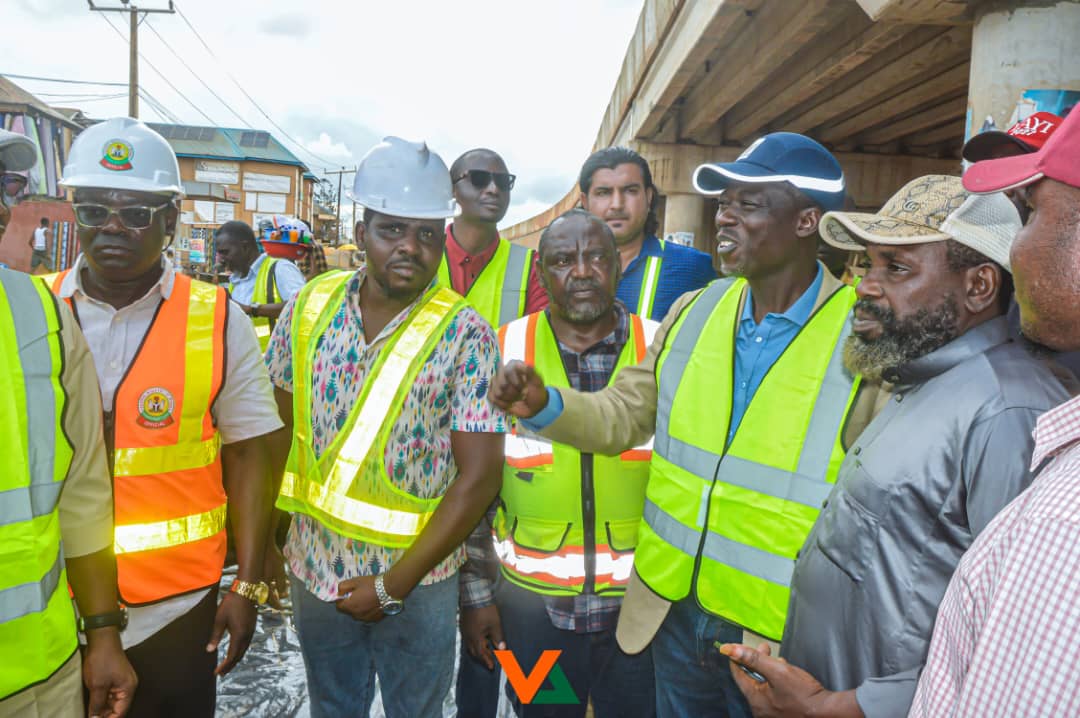
The petition, signed by the publisher of the group, Rev. David Ugolo, followed comments reportedly made by the Minister of Works, David Umahi, during an inspection of the road and adjoining bridge infrastructure in August.
According to the coalition, the minister stated that Hartland Nigeria Limited had received approximately N14 billion under an agreement to complete the road from Summit Junction in Asaba, Delta State, to the Onitsha Head Bridge, including channelisation and hydraulic structures.
The minister was also reported to have said that the project was about 40 per cent completed and called for the arrest of the company’s managing director.
Speaking at a press conference in Abuja, the coalition said the minister’s statements warranted a professional examination of the contract, procurement records, payment documents, engineering measurements and bank guarantees.
Ugolo stressed that the petition did not amount to an allegation of criminal wrongdoing against the contractor, its directors, public officers or any other party involved in the project.
Rather, he said, the group wanted competent authorities to establish the facts and take appropriate legal action if evidence of wrongdoing emerged.
The coalition called for the authorities to establish the contract’s reference number, date of award, procurement method, approving authority and original contract sum. It also urged them to verify the precise scope of the project, including road sections, drainage, channelisation and hydraulic works.
It further requested an examination of any supplementary agreements, variations, extensions or renegotiations that may have affected the contract’s scope, cost or completion period.
On payments, the group asked investigators to establish the exact amount disbursed to the contractor, the dates and purposes of the payments and the contractual instruments authorising them.
It also called for the verification of payment certificates, engineering measurements, approvals and budgetary provisions supporting each payment.
The coalition urged the authorities to identify the engineers, consultants, project managers, accounting officers and other officials involved in measuring the work, certifying payments, supervising the project and assessing its performance.
It further demanded an independent engineering and quantity-surveying assessment to determine the actual percentage and monetary value of work completed, its quality and compliance with approved designs and specifications, as well as the cost of completing the project.
According to the group, the independent assessment should be compared with the minister’s reported 40 per cent completion figure to determine whether the Federal Government received value corresponding to the amount paid.
The coalition also asked investigators to examine advance-payment guarantees, performance bonds, insurance policies and other securities attached to the contract and establish whether they remained valid when any non-performance was identified.
It urged the EFCC to trace all payments connected to the project, obtain relevant bank records and investigate possible fraud, false certification, diversion, conspiracy or money laundering where supported by evidence.
The group asked the Independent Corrupt Practices and Other Related Offences Commission (ICPC) to examine the conduct of public officers involved in procurement, supervision, certification and payment, while the CCB was urged to investigate any potential conflict of interest involving public officials.
It also called on the BPP to review the contract and its variations for compliance with procurement regulations, while asking the Attorney-General of the Federation to provide legal guidance and coordinate related investigations.
On the minister’s reported call for the arrest of the contractor’s managing director, the coalition said any arrest must be carried out by a legally empowered law-enforcement agency and based on reasonable grounds.
It stressed that the presumption of innocence, right to legal representation and other constitutional safeguards must be respected.
The group further called for the investigation to cover not only the contractor but also public officials, consultants and financial institutions involved in approving, certifying, processing or securing payments.
It requested the immediate preservation of relevant documents and evidence, including procurement records, payment certificates, bank records, guarantees, project designs, measurement books, laboratory reports, inspection reports and official correspondence.
The coalition also demanded the recovery of any funds found to have been unearned, fraudulently obtained or improperly paid, as well as enforcement of valid guarantees and performance bonds.
It called for the prosecution of anyone against whom sufficient admissible evidence of an offence was established and appropriate disciplinary action against public officials found to have acted negligently or dishonestly.
The group also urged the authorities to ensure the completion or emergency remediation of the road through a transparent and technically credible process.
It requested written acknowledgement of the petition and a case reference number within seven working days, as well as public confirmation within 30 days that the allegations were being investigated.
The coalition said the ultimate objective was to establish whether the approximately N14 billion reportedly paid for the project was properly authorised, properly certified and matched by work of corresponding value.
“The minister’s public statement provides a basis for investigation, but it is not itself proof of criminal liability,” the group said, urging authorities to “follow the contract, follow the money, examine the certificates, establish responsibility and apply the law fairly to both private actors and public officials.”
