Nigeria’s Airline Capacity Rises 37.4% To 1.19m Seats In September — FAAN
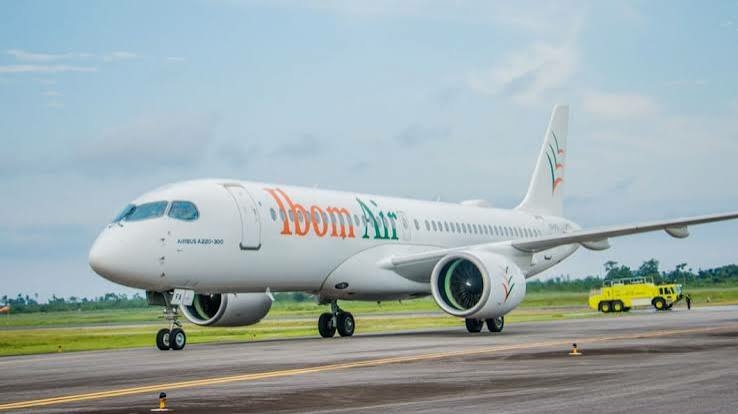
Nigeria’s scheduled airline capacity rose by 37.4 per cent year-on-year to 1.19 million seats in September 2026, reflecting growing activity in the country’s aviation sector, the Federal Airports Authority of Nigeria (FAAN) has disclosed.
The Managing Director of FAAN, Mrs Olubunmi Kuku, disclosed this on Tuesday at the opening of the 2026 Airport Council International (ACI) Africa Conference and Exhibition in Abuja.
Kuku said the growth placed Nigeria among the fastest-growing aviation markets in Africa, attributing the increase to currency reforms, new aircraft leasing agreements and renewed confidence among international airlines seeking to operate in the country.
According to data from aviation analytics firm OAG, Nigeria recorded the fastest growth in scheduled airline capacity among Africa’s top 10 aviation markets during the period under review.
Kuku also revealed that Nigeria’s aviation market ranked as the fourth-largest in Africa, with more than 18.8 million domestic and international passengers recorded in 2025. She said the figure represented an 11.9 per cent increase compared with the previous year.
She further highlighted the performance of the Murtala Muhammed International Airport in Lagos, noting that the airport recorded a 24.1 per cent increase in scheduled seat capacity in September. According to her, the growth was the fastest among Africa’s 10 largest airports, even as rehabilitation and upgrading work continued at the airport’s oldest terminal.
Speaking on developments across the continent, the FAAN chief, who also serves as Vice President of ACI Africa, said African aviation was experiencing significant growth in passenger demand.
She cited the latest data from the International Air Transport Association (IATA), which showed that African airlines recorded a 6.4 per cent year-on-year increase in international passenger demand in July 2026.
Kuku contrasted the regional growth with a 0.1 per cent decline in global international passenger demand during the same period, noting that Africa’s aviation sector continued to expand despite challenges affecting the global industry.
She added that Africa’s overall passenger demand grew by 5.2 per cent, placing the continent second only to Latin America and the Caribbean and ahead of the global average growth rate of 0.2 per cent.