Tinubu Says CNG Transport Is Cutting Fares, Easing Commuters’ Burden
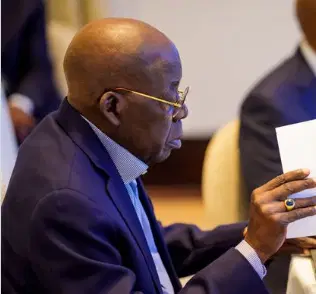
President Bola Tinubu has said investments in compressed natural gas (CNG) and electric-powered transportation are helping to reduce transport fares and ease the financial burden on Nigerians amid rising petrol prices.
Tinubu stated this in a post on his X account on Sunday, October 11, 2026, citing accounts from commuters and commercial drivers who reported lower transportation costs and improved operating efficiency after switching to alternative-fuel vehicles.
The President cited the experience of a commuter identified as Blessing, who reportedly now pays ₦500 for a trip from Masaka to Berger in the Federal Capital Territory (FCT), compared with the previous fare of ₦1,500, representing a saving of ₦1,000 per journey.
He also highlighted the experience of Ada and Abigail, who reportedly pay ₦1,600 to travel from Enugu to Nsukka, down from ₦4,000, saving ₦2,400 per trip.
Tinubu further disclosed that a taxi driver, Kabir, had reported that spending ₦10,000 on CNG enabled him to complete three additional return trips compared with colleagues operating petrol-powered vehicles.
According to the President, some commuters in Borno State have also benefited from reduced fares, with certain journeys reportedly costing as little as ₦50 on CNG-powered and electric vehicles.
He said the savings recorded by drivers through lower operating costs should translate into more affordable fares for passengers and leave households with additional money for essential needs.
Tinubu acknowledged that the removal of the petrol subsidy had placed considerable pressure on many Nigerian households but maintained that his administration was working to provide alternatives that would make transportation more affordable.
He said the Federal Government was collaborating with state governments, through the Nigeria Governors’ Forum, and private investors to expand access to affordable transportation under the National Affordable CNG Transportation Programme.
More buses, electric vehicles
The President disclosed that several states had received new buses or introduced alternative-fuel transportation as part of efforts to improve public mobility.
According to him, Ekiti State received 15 buses in recent weeks, while Lagos received 20 buses and Akwa Ibom had 50 buses ready for service.
He added that Katsina had introduced 30 CNG hybrid buses and 200 electric tricycles, while Kano had received 30 CNG buses and five electric buses.
Tinubu also announced that another rollout was planned for Edo State.
He said Kaduna State’s fleet of 100 CNG buses had transported more than three million passengers, highlighting the role of alternative-fuel vehicles in public transportation.
Beyond expanding bus services, the President said more than 400 certified conversion centres had converted over 120,000 vehicles to CNG.
He added that the government was expanding refuelling infrastructure to improve access to the fuel and support wider adoption of CNG-powered vehicles.
FG outlines measures to ease fuel costs
Tinubu also outlined measures introduced by his administration to cushion the impact of rising petrol prices on households and businesses.
He said the Federal Government had waived more than ₦3.3 trillion in fuel taxes and duties as part of its relief efforts.
The President further disclosed that NNPC Retail was foregoing its profit margin for 30 days, with priority given to public transportation operators.
He added that the government was working towards establishing a ceiling of ₦1,350 per litre on wholesale petrol supply costs to help reduce price volatility.
Tinubu said the measures were intended to provide immediate relief while the government continued to expand affordable transportation options across the country.
He maintained that investments in CNG and electric mobility, alongside the expansion of public transport fleets and supporting infrastructure, were central to his administration’s efforts to reduce transportation costs for Nigerians.