


Transport Unions Reject October 1 Fare Cut Plan, Seek Clear Guidelines
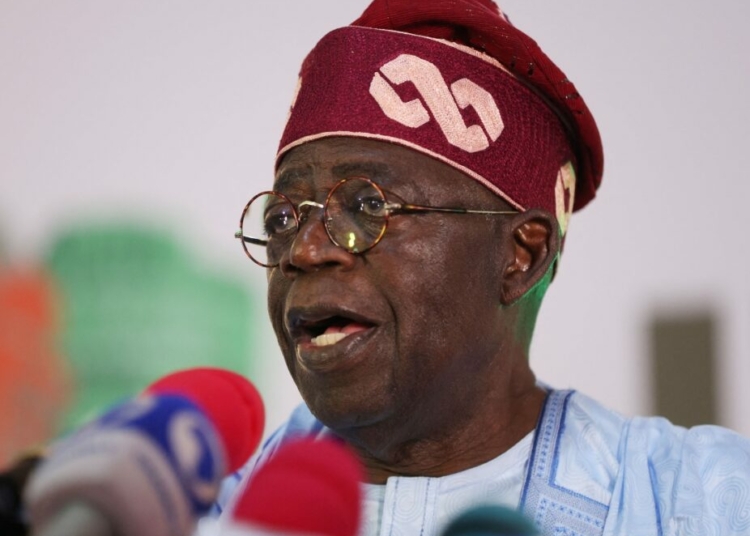
Transport unions have expressed reservations over the Federal Government’s plan to reduce intra-state transport fares from October 1 through the increased adoption of Compressed Natural Gas (CNG) and electric vehicles.
The unions said they had not been formally consulted on the proposed fare reduction and were yet to receive clear guidelines on how the policy would be implemented.
The Presidential Initiative on Compressed Natural Gas and Electric Vehicles (Pi-CNG & EV), however, said the programme would be implemented gradually through state-level engagements rather than as a blanket national directive.
President Bola Ahmed Tinubu had directed that savings generated from the lower operating costs of CNG and electric vehicles should be passed on to commuters through reduced transport fares. He also directed the Federal and state governments to establish a joint committee to facilitate implementation.
But the Ikeja branch chairman of the National Union of Road Transport Workers (NURTW), Isiaka Apena, said operators had only learnt of the directive through media reports.
Apena called for direct engagement between the government and transport unions, urging authorities to clarify whether operators would receive subsidies, vehicles or other forms of support to enable them reduce fares.
He argued that transport operators could not be compelled to charge fixed fares without considering the cost of financing and maintaining their vehicles.
According to him, the government could determine an appropriate fare reduction where subsidies are provided, based on the level of support given to operators.
Apena also identified inadequate CNG refuelling infrastructure as a major challenge, noting that long queues at the few available stations often force drivers to spend several hours waiting to refuel.
Checks at some CNG stations in Lagos and Abuja reportedly showed that commercial drivers sometimes spend hours in queues, with some reverting to petrol when waiting times become excessive.
A tricycle operator at the Agidingbi CNG station in Lagos said he now arrives as early as 4 a.m. to secure a place in the queue, while a commercial bus driver operating on the Berger-Ikeja route said waiting times could exceed five hours during peak periods.
Meanwhile, the Nigerian Association of Road Transport Owners (NARTO) said it was monitoring the presidential directive and would issue a comprehensive position on the matter.
Government data indicates that about 120,000 vehicles have been converted to CNG since 2023 through approximately 400 certified conversion centres. However, the country has fewer than 100 CNG refuelling stations.
The government has also deployed 655 CNG buses and 5,123 CNG-powered tricycles as part of efforts to promote cheaper and cleaner transportation.
Despite the increase in CNG-powered vehicles, transport fares on several routes have remained largely unchanged.
For instance, fares between Sango-Ota in Ogun State and Oshodi in Lagos reportedly remain between ₦1,500 and ₦1,700, while commuters travelling from Ojodu Berger to Ibadan pay about ₦2,500.
Some commuters also said they had yet to benefit from fare reductions despite travelling in CNG-powered vehicles.
Automobile engineer and Chairman of the Board of Directors of Driving Schools in Nigeria, Saliyu Aliu, said the limited availability of CNG infrastructure would make significant fare reductions difficult in the short term.
He urged the government to establish more refuelling stations, particularly in northern Nigeria, where commercial transport is an important component of daily mobility.
Similarly, automotive development expert Luqman Mamudu described the CNG conversion programme as a good starting point but said it remained insufficient to deliver widespread reductions in transport fares.
Mamudu noted that the 120,000 vehicles converted to CNG represented only a small fraction of Nigeria’s estimated 15 million registered vehicles.
He therefore recommended targeted transport subsidies alongside the expansion of CNG and electric-vehicle infrastructure.
Responding to the concerns, the Chief Operating Officer of Pi-CNG & EV, Tosin Coker, said the programme was designed to ensure that lower CNG operating costs ultimately translate into savings for commuters.
Coker explained that implementation would not follow a one-size-fits-all approach because transport systems, routes, operators and CNG infrastructure differ from one state to another.
He said state-level committees involving governments, transport unions, operators and other stakeholders were being developed to determine the most appropriate implementation models for each location.
According to him, engagements with NURTW, the Road Transport Employers Association of Nigeria (RTEAN), NARTO, cooperatives and other transport operators are already part of the implementation process.
Coker clarified that October 1 should not be interpreted as a deadline for achieving a single nationwide vehicle-conversion target, but as part of a broader strategy to increase the number of commercial CNG vehicles while expanding the infrastructure required to support them.
He also stressed that the government was not seeking to force motorists to completely abandon petrol, but to make CNG sufficiently affordable and accessible to encourage operators to switch based on economic benefits.
He added that partnerships, including one with fintech company Moniepoint, were being developed to provide financing options for eligible vehicle owners to convert their vehicles and repay the costs over time.
Coker maintained that vehicle conversion alone would not guarantee cheaper transportation unless operators could access CNG conveniently.
He said the ultimate measure of the programme would be whether the lower operating costs achieved through CNG and electric vehicles translate into tangible reductions in transport fares for Nigerians.
