Reps Set To Probe Maintenance, Failures Of Nigeria’s Refineries
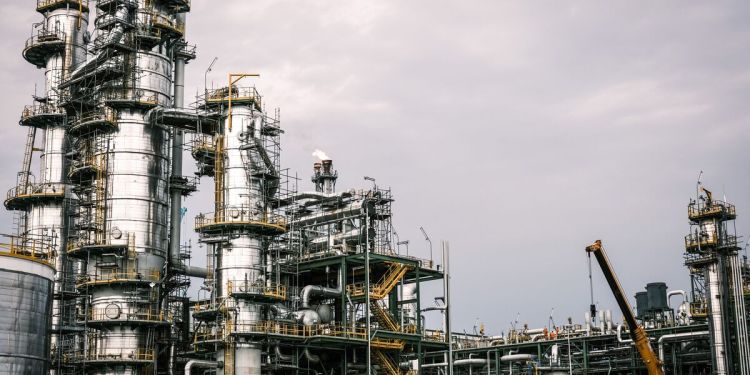
The House of Representatives Committee on Petroleum Resources (Downstream) has launched a comprehensive investigation into several critical issues affecting Nigeria’s downstream oil sector,.
The investigation will cover, among others, the controversial Turn Around Maintenance (TAM) of the country’s refineries, the acquisition of OVH Energy, and the mounting concerns over market dominance by the Dangote Refinery.
Speaking at a press conference on Wednesday, the Chairman of the Committee, Ikenga Ugochinyere (PDP, Imo), said the investigation aims to uncover the reasons behind the persistent underperformance of the Port Harcourt and Warri refineries, despite substantial investments and public assurances of operational readiness.
Mr Ugochinyere noted that the committee intends to establish whether these failures justify the proposals to sell or privatise the refineries, even as he insisted that a thorough fact-finding process must precede any such decision.
He said the committee will investigate the constraints faced by local and modular refineries in accessing crude oil.
According to the chairman, it is “unacceptable” that Nigerian refiners are compelled to travel as far as Switzerland to negotiate the purchase of Nigerian crude, calling for urgent solutions to ease domestic crude supply.
Audience Feedback Survey
The committee, Mr Ugochinyere said, has received numerous petitions from stakeholders across the sector including refinery operators, oil marketers, and retailers, raising concerns about policy inconsistencies that threaten their investments.
Among the most contentious issues is the alleged plan by the Dangote Refinery to assume control over the transportation and retailing of petroleum products, a move stakeholders fear could lead to market monopoly. The lawmaker noted that several marketers and retailers have warned that such a development could cripple private investments and trigger market instability.
“The committee agreed this morning to look into the state of the refinery to find out what happened because public funds were paid. It is a company but the access of the company still belongs to the Nigerian people and they are asking us questions. “The committee has received series of petitions which we have decided to handle to find out the state of refinery and the Turn Around Maintenance ” he said.
Mr Ugochinyere further disclosed that the committee is reopening investigations into the acquisition of OVH Energy by the Nigerian National Petroleum Company (NNPC) Retail, following unresolved complaints from staff and stakeholders.
The House had earlier rejected the findings of a previous investigation and mandated a fresh review of the deal.
“The committee after receiving petitions about the non-completion of the investigation that was ordered by the House for the investigation of the circumstances surrounding the acquisition of OVH energy, resolved to complete that detective of the House to investigate the matter. It was investigated before but the Parliament rejected the first report and asked for detailed work to be carried out ” he said.
On broader legislative reforms, Mr Ugochimyere announced plans to propose amendments to the Petroleum Industry Act (PIA) to address emerging gaps and strengthen regulatory frameworks particularly around the role of the Nigerian Midstream and Downstream Petroleum Regulatory Authority (NMDPRA).
While confirming the dismissal of a petition seeking the dissolution of the NMDPRA board, the committee chair emphasised that appointment powers rest with the President under the PIA.
“We cannot go back to the old order where every government fires people anyhow.
“We are not out to protect anybody. If anybody is found to have been engaged in corrupt activities, the law should be allowed to take its course,’” he added.
The committee also announced investigation into the potential exclusion of artisanal refiners from the petroleum refining value chain.
According to Mr Ugochinyere, the experience and capacity of these small-scale operators should not be overlooked in ongoing reforms.
He said the committee is also probing the alleged abandonment of the Biomas Ethane project and lingering concerns over fuel importation, including how to ensure adequate protection for local refiners through legislative interventions.
A pattern of failures and probes
The committee’s investigation reflects a longstanding pattern of failed reforms and questionable spending in Nigeria’s downstream sector.
Between 1999 and 2021, successive administrations approved billions of naira for TAM across the country’s major refineries without tangible results.
In 2021 alone, the Federal Executive Council (FEC) approved $1.5 billion for the rehabilitation of the Port Harcourt refinery, which lawmakers criticised as wasteful when the facility failed to deliver results.
Likewise, the acquisition of OVH by NNPC Retail in 2022 triggered similar outrage. Stakeholders accused NNPC of side-stepping due process and using the acquisition to expand its retail dominance at the expense of transparency and fair market competition.
Concerns about potential monopoly by the Dangote Refinery have also been raised before, particularly as the refinery approaches full-scale operations. Independent marketers have warned that without policy safeguards, the company’s vertical integration could crowd out smaller players and distort petroleum product pricing and distribution.
This is not the first time the committee will be involved in the investigation of the oil sector..
In 2024, it was part of an ad hoc committee mandated to investigate the importation of adulterated petroleum products, the non-availability of crude oil for domestic refineries, and other critical energy security issues.
The ad hoc committee was, however, dissolved by the leadership of the House following some controversies it was enmeshed in, particularly regarding the investigation of the impasse between the Dangote Refinery and the Nigerian Midstream and Downstream Regulatory Authority (NMDRA).