

Stakeholders Move To End Lekki Port Corridor Gridlock
Stakeholders operating within the Lekki Deep Seaport corridor have agreed on a series of measures aimed at eliminating the persistent traffic gridlock that has crippled access roads to the port and adjoining industrial facilities for more than a year.
The resolution was reached at a strategic stakeholders’ meeting convened by the Nigerian Ports Authority (NPA) and chaired by the Lekki Port Manager, Emmanuel Anda.
The meeting was attended by representatives of the Lagos State Government, Lekki Port, Dangote Refinery, truck owners’ associations, the Electronic Truck Call-Up System operator, and other key industry stakeholders.
A major decision taken at the meeting was the prohibition of stationary trucks and tankers along the Lekki port corridor.
Stakeholders agreed that all trucks must remain in designated holding bays and waiting areas until they receive clearance to proceed to the port or industrial facilities.
The agreement followed an inspection tour of the Lekki port access roads by the stakeholders, who witnessed firsthand the severity of the traffic congestion. They subsequently resolved that the situation could no longer be allowed to persist.
Speaking at the meeting, the representative of Mycallup, the electronic truck call-up system operator for the Lekki Port corridor, Timi Koteolu, identified trucks servicing Dangote Refinery outside the electronic scheduling platform as one of the major causes of the gridlock.
According to him, many truck drivers operating with Dangote Refinery’s Authority to Collect (ATC) permits have been found parking indiscriminately along the roads while waiting to gain access to the refinery.
Koteolu disclosed that trucks servicing the refinery are currently not integrated into the port’s electronic call-up system, a development he said has contributed significantly to the traffic bottleneck.
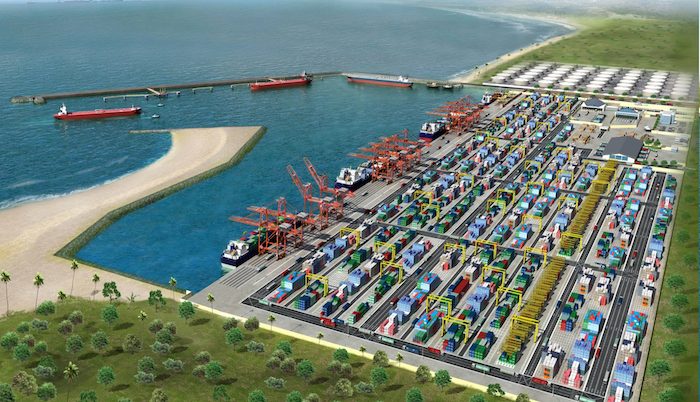
Lekki Port is fully automated to boost international trade
Responding, the representative of Dangote Refinery, Jaiyeola Moshood, explained that the ATC permits serve as the approved access mechanism for tankers entering the refinery.
However, the management of the electronic truck call-up system maintained that trucks without an active call-up should not approach the port corridor and should instead remain in designated waiting areas until they are required at their respective terminals.
The Association of Maritime Truck Owners (AMATO) and the National Association of Road Transport Owners (NARTO) pledged their support for the initiative, promising to sensitise their members while calling for strict enforcement of traffic regulations to restore order along the corridor.
Also speaking, the Coordinator of NUPENG Dangote Refinery, Ademola Adeshina, stressed the need to decongest the port corridor and assured stakeholders that his members would comply with the established Standard Operating Procedures.
Anda commended the stakeholders for their commitment to finding a lasting solution to the traffic challenge and urged all parties to adopt a practical approach to addressing the menace.
He specifically encouraged Dangote Refinery to fully integrate with the electronic truck call-up platform, noting that such collaboration would significantly improve traffic management and reduce the indiscriminate presence of trucks on the access roads.
The Lekki Port Manager also assured participants that discussions would continue with the management of Dangote Refinery to strengthen coordination of truck movements, stressing that vehicles issued with ATC permits should only proceed when duly cleared.
Stakeholders expressed optimism that the collective measures would restore free flow of traffic, improve operational efficiency, and enhance safety along the Lekki port corridor, a critical gateway for Nigeria’s expanding maritime and industrial activities.
