Lagos Residents Ignore Pedestrian Bridges Despite Enforcement
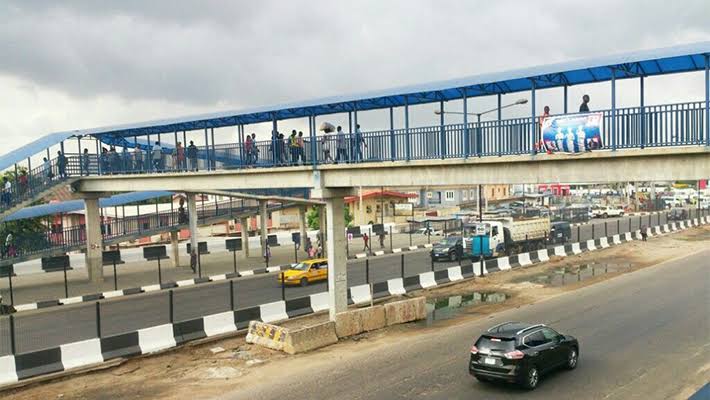
LAGOS — Despite ongoing enforcement by state authorities, many residents of Lagos continue to ignore pedestrian bridges and cross busy expressways, raising concerns over road safety across the state.
Officials of the Lagos State Environmental Sanitation Corps (LAGESC) said enforcement against unsafe highway crossing remains active, with offenders regularly arrested and prosecuted.
Speaking with journalists, the Head of Public Affairs and Advocacy Unit of LAGESC, Lukman Ajayi, said pedestrians who refuse to use designated bridges are apprehended and charged to court, where sanctions are imposed.
According to him, enforcement efforts are complemented by public awareness campaigns and stakeholder engagement aimed at promoting safer use of public infrastructure.
However, commuters along major corridors such as Airport Junction, Oshodi, Mile 2, Toyota and Iyana Ipaja continue to cross expressways directly, often weaving through moving vehicles even where pedestrian bridges are available.
Some commuters attributed the trend to convenience. Francis Mathew, a regular commuter, said crossing the road is often quicker than climbing pedestrian bridges.
Others cited the long distance between bus stops and pedestrian bridges as a major challenge, noting that they are forced to walk considerable distances before accessing the bridges and then backtrack to their destinations.
Several residents also complained about the design of the bridges, describing them as physically demanding, especially for elderly people, individuals carrying heavy loads and those with mobility challenges.
Security concerns have further discouraged usage, with some commuters expressing fears of robbery and harassment on deserted bridges, particularly at night.
A Point of Sale (POS) operator along Airport Road, Goodness Dozie, alleged that some individuals who loiter on the bridges temporarily leave during enforcement operations by LAGESC officials but return once the officials depart.
In some locations, including parts of Mile 2 and Toyota Bus Stop, the absence of pedestrian bridges has left commuters with few alternatives, forcing them to cross busy roads at great risk.
At Isolo, Cele and Mile 2, pedestrians were seen using makeshift means such as wooden planks and stones to navigate across expressways.
An Isolo resident, Agatha Chukwuemeka, said she often waits for long periods before attempting to cross due to fear of speeding vehicles.
Meanwhile, transport experts have linked the problem to poor infrastructure planning and behavioural patterns.
Professor Samuel Odewumi, a transport policy and logistics expert and former Dean of Lagos State University, said many pedestrian bridges in Nigerian cities are supply-driven rather than designed around actual pedestrian movement patterns.
He noted that poor accessibility, safety concerns and weak enforcement discourage compliance, stressing that pedestrians often prioritise time, comfort and perceived safety over regulations.
Similarly, civil engineer and former Chairman of the Lagos chapter of the Nigerian Institution of Civil Engineers, Omolola Adetona, said the location and design of some bridges reduce their effectiveness.
She emphasised that pedestrian infrastructure can only achieve its intended purpose when it aligns with how commuters move and are willing to use it.
Also speaking, Director of Safety Beyond Borders, Patrick Adenusi, attributed the trend to a combination of inadequate infrastructure and entrenched behavioural habits.
According to him, many residents have become accustomed to crossing highways directly, making it their default choice even when pedestrian bridges are available.
He called for improved infrastructure, sustained public awareness campaigns and behavioural change initiatives to encourage safer road-crossing practices and reduce accidents on Lagos roads.