

Federal Road Collapse Cripples Agriculture, Trade In Delta Community
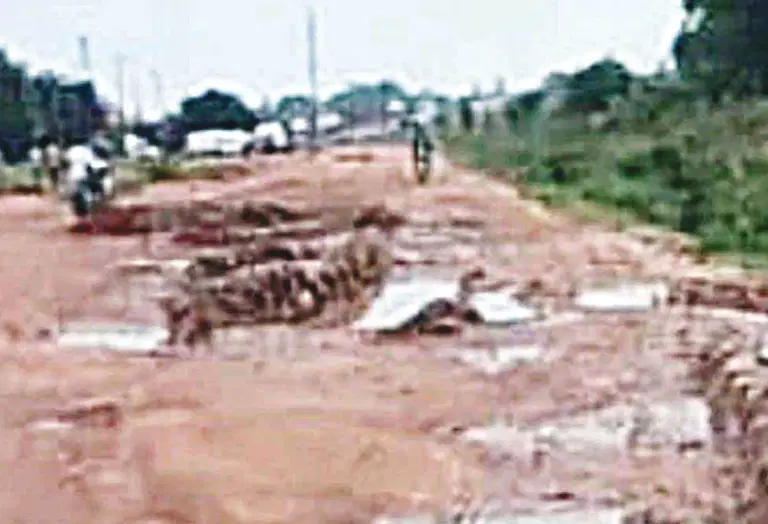
The once-thriving agricultural economy of Abavo in Ika South Local Government Area of Delta State is facing a major downturn as the deteriorating condition of the Abavo section of the Amukpe-Eku-Abraka-Agbor Federal Road continues to hamper movement and commercial activities.
The road, which serves as a major link between Abavo and neighbouring communities, has become largely impassable, forcing motorists and traders to avoid the route. Residents say the development has severely affected the transportation of farm produce to major markets, leaving large quantities of cassava, yam, tomatoes, pepper, plantain and palm produce to waste.
The worsening road condition has also heightened security concerns, with residents alleging that criminals have taken advantage of the isolation to carry out attacks, including armed robbery and kidnapping.
As a result, many motorists now rely on longer internal routes through neighbouring communities, while farmers face difficulties accessing their farms and transporting harvested produce.
President General of the Abavo Clan Union, Mr Amechi Mumeh, described the situation as a serious threat to the community’s economy, saying the once-busy Oyoko Market had been reduced to a shadow of its former self.
Mumeh said traders who previously travelled from Warri, Port Harcourt, Kaduna and other areas to purchase agricultural products had stopped coming because of the poor road and security challenges.
“Our economic activities have suffered greatly. The Oyoko Market, which for a long time attracted traders from Warri, Port Harcourt and even Kaduna, is now almost deserted,” he said.
He added that farmers now struggle to sell their produce, resulting in significant losses.
“We harvest our produce, but we no longer have enough customers from distant places; most buyers are now local. As a result, many of our farm products perish before they can be sold,” Mumeh said.
He appealed to the Federal and Delta State governments to urgently intervene, stressing that efforts by residents to address the problem had not yielded meaningful results.
Another indigene, Mr Udueme, said although reported attacks by suspected herdsmen had reduced recently, fear continued to discourage many farmers from accessing their farmlands.
He said the road’s condition had also contributed significantly to the decline in patronage at Oyoko Market, which previously attracted traders from Obiaruku, Umutu, Eku, Abraka and Orhonigbe in Edo State.
“The market that used to be a beehive of activity is now a shadow of itself,” he lamented.
Udueme maintained that Abavo has the agricultural capacity to supply food to Delta State and other parts of southern Nigeria, but poor road access remains a major obstacle.
He listed yam, tomatoes, pepper, palm and plantain among the crops produced in large quantities in the area, noting that farmers could significantly increase production if transportation and security challenges were addressed.
According to him, rehabilitating the federal road would quickly revive economic activities in the community.
“If they repair that federal road, within two months, all commercial activities in the Abavo enclave will wake up,” he said.
He stressed that the rehabilitation would not only benefit Abavo but also neighbouring communities that depend on Oyoko Market for affordable agricultural produce.
Residents therefore urged the Federal Government and the Delta State Government to urgently rehabilitate the road and improve security along the corridor, warning that continued neglect could further undermine agricultural production, trade and livelihoods in the community.
