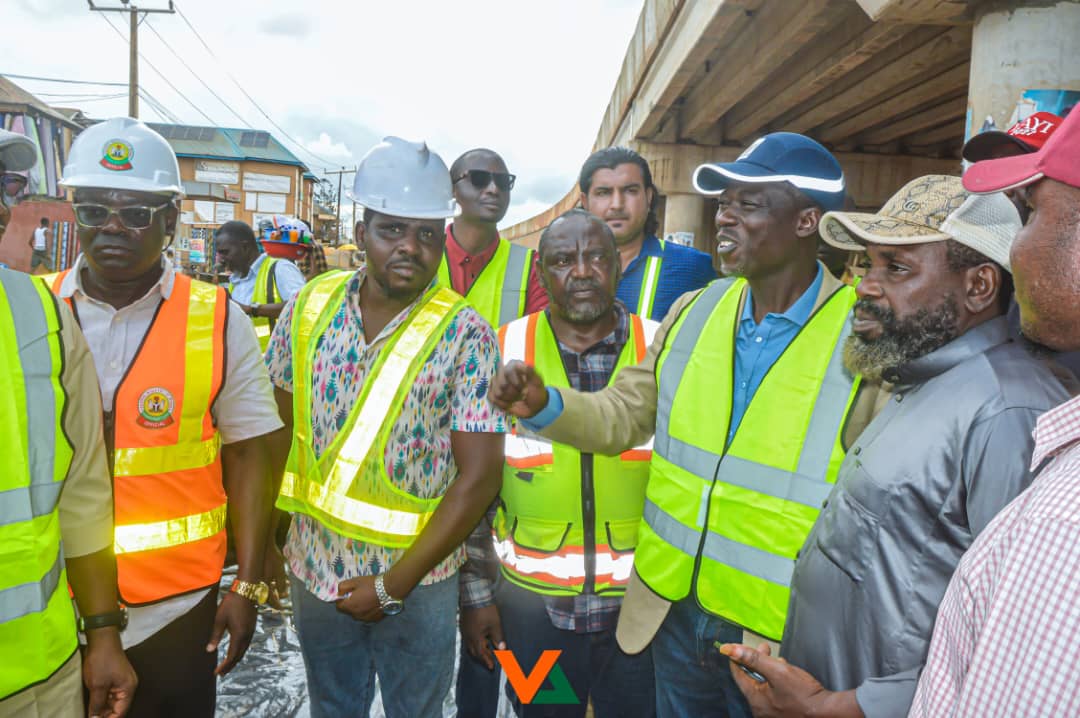
First Niger Bridge Closure Begins, Commuters Raise Concerns Over Owerri Road

NNEWI — The temporary closure of the First Niger Bridge to vehicular traffic commenced on Monday as the Federal Government began emergency maintenance and rehabilitation works on the strategic bridge.
The two-week closure, which started in the early hours of September 7, was announced by the Federal Government to allow the Federal Ministry of Works carry out repairs aimed at improving the safety and durability of the bridge.
Following the closure, motorists travelling between Onitsha in Anambra State and Asaba in Delta State were diverted to the Second Niger Bridge.
Heavy-duty construction equipment and vehicles were deployed to the First Niger Bridge, effectively restricting vehicular movement between the Onitsha and Asaba ends.
The development affected commuters who regularly travel between both cities for work, business and other activities. Some residents of Asaba who work in Onitsha, as well as Onitsha residents doing business in Asaba, said traffic diversions to the Second Niger Bridge began as early as 5:30 a.m.
Although many commuters acknowledged the importance of the maintenance work, they expressed concern that the closure could worsen traffic congestion on roads connecting Onitsha with the Second Niger Bridge.
Particular concern was raised over the condition of Owerri Road in Onitsha, which residents said was already experiencing heavy traffic and had deteriorated significantly over the years.
The affected sections include the stretch from Upper Iweka towards the Metallurgical Training Institute, Obosi, as well as areas around the Electrical Market.
A resident, Okechukwu Ojukwu, said the additional traffic generated by the bridge closure could put further pressure on the already congested road.
He appealed to the Anambra State Government and other relevant authorities to urgently address the condition of Owerri Road, describing it as an important route for people travelling into Onitsha from Imo and Delta states.
Ojukwu also called for a review of security checkpoints along the route, arguing that they could further slow down traffic during the diversion period.
Meanwhile, the Federal Road Safety Corps, FRSC, Anambra State Command, has deployed personnel to strategic locations around the Onitsha end of the First Niger Bridge to manage traffic and ensure the safety of motorists throughout the maintenance period.
The command’s Public Education Officer, Margaret Onabe, said the deployment was part of measures to facilitate smooth vehicular movement and reduce the risk of crashes during the two-week closure.
Ahead of the closure, the FRSC also conducted a road audit of major routes expected to handle increased traffic from the First Niger Bridge.
The exercise was led by the Anambra State Sector Commander, Bridget Asekhauno, in collaboration with officials of the Federal Ministry of Works in Anambra and Delta states, the Sector Head of Operations and the Commander of the Anambra Road Traffic Management Agency, ARTMA.
The FRSC said the audit was conducted to identify potential traffic bottlenecks and areas requiring urgent intervention along the alternative routes.
Motorists were advised to consider alternative routes leading to the Second Niger Bridge, including the Nkpor–Old Road–Obosi route, Onitsha–Owerri Road from Upper Iweka, and Atani Road through Uga Junction to Harbour Industrial Layout.
The agency urged motorists to cooperate with traffic-management personnel deployed to the affected areas and comply with diversion signs and other instructions.
The Anambra State Government had earlier informed residents about the planned closure, explaining that the rehabilitation was necessitated by the deteriorating condition of the bridge’s carriageway and damage to some of its components.
The state government advised motorists to access the Second Niger Bridge through Obosi towards Asaba during the maintenance period.
Similarly, the Managing Director of ARTMA, Emeka Okonkwo, urged motorists to obey temporary road signs and diversion instructions, exercise caution around construction zones and cooperate with traffic officers to minimise delays and ensure safety.
The authorities said the measures were designed to keep traffic moving and reduce disruptions while maintenance work is being carried out on the First Niger Bridge.