Osun Gives Commercial Transport Operators 60 Days To Register Under New Law
The Osun State Government has given commercial vehicle operators 60 days to register under its newly enacted Transport, Traffic and Park Management System Law, 2026, as part of efforts to regulate transport operations, improve road safety and curb multiple taxation across the state.
The deadline was announced by the acting chairman of the Osun Internal Revenue Service (OIRS), Solanke Hamzat, on Wednesday during a sensitisation programme organised by the state Ministry of Transportation to educate stakeholders on the implementation of the law.
Governor Ademola Adeleke signed the legislation into law on October 5, 2026, following its passage by the Osun State House of Assembly on September 23.
The governor had described the law as a response to longstanding challenges in the management of motor parks across the state, promising that its implementation would commence promptly.
Speaking at the sensitisation programme, Hamzat said the law had already taken effect, stressing that commercial vehicle operators were required to complete their registration within 60 days of the governor’s assent.
He explained that the registration requirement was aimed at bringing commercial transport activities under a more organised regulatory framework while improving transparency in revenue collection.
According to him, the reform would also address multiple taxation, illegal revenue collection and revenue leakages associated with duplicated tickets and irregular levies.
Hamzat said the introduction of digitalised ticketing and payment records would help eliminate repeated demands for payments from operators who had already fulfilled their obligations.
He added that operators would be able to present digital receipts as proof of payment, thereby reducing harassment by unauthorised revenue collectors and transport touts.
The OIRS chairman further explained that the initiative aligned with efforts to simplify tax administration and promote a transparent system in which commercial transport operators would have clearer obligations.
The law also introduces a digital ticketing system designed to tackle the problem of multiple ticketing in motor parks, an issue that has contributed to disputes over park management and control within the state’s transport sector.
The development follows the Osun government’s suspension of activities of the National Union of Road Transport Workers (NURTW) in September amid disputes and reported violence linked to the control of motor parks.
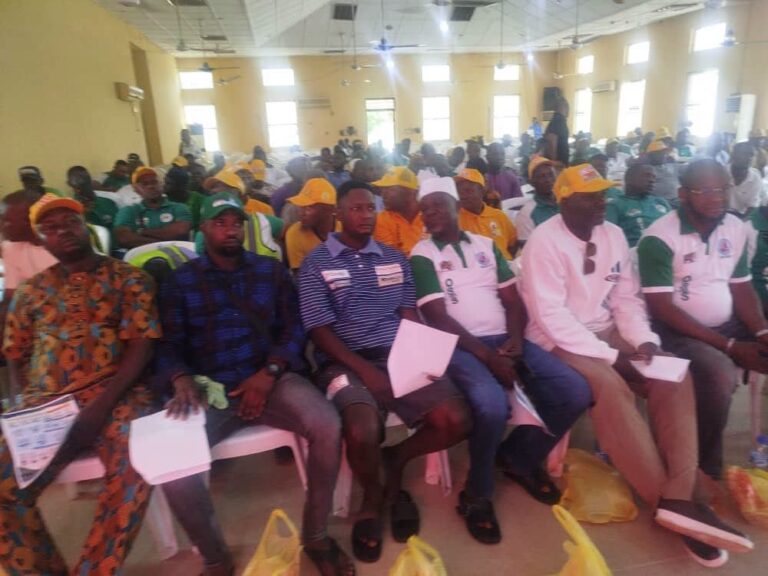
Meanwhile, the Permanent Secretary and Accounting Officer of the state Ministry of Transportation, Olumide Taiwo, said the sensitisation exercise was intended to ensure that stakeholders understood the provisions of the new law and their responsibilities under the regulatory framework.
Taiwo said the programme targeted drivers, riders, vehicle owners, transport associations, park managers and other stakeholders who would be directly involved in the implementation process.
He noted that the exercise was not merely intended to announce the new legislation but also to explain the protections and benefits available to operators under the system.
Under the law, commercial transport operators and their vehicles must be registered and identified, while vehicles are expected to operate from approved motor parks and loading points.
The legislation also provides for roadworthiness checks and technology-assisted enforcement to strengthen compliance with transport regulations and improve safety on the state’s roads.
Other provisions include electronic identification through Quick Response (QR) codes and near-field communication (NFC) credentials, digital payment records, surveillance cameras and automatic number plate recognition systems.
The state government also said the daily operational levy would be linked to verified commercial activity, allowing a distinction between days when vehicles operate commercially and days when they remain inactive.
The measure is expected to reduce arbitrary assessments and prevent operators from being subjected to multiple collections regardless of their level of commercial activity.
The government said the new framework was designed to promote accountability, improve revenue administration and establish a more orderly and transparent transport system across Osun State.