

Sanwo-Olu Gives Lagos-Badagry Expressway Shanty Occupants 72 Hours To Vacate
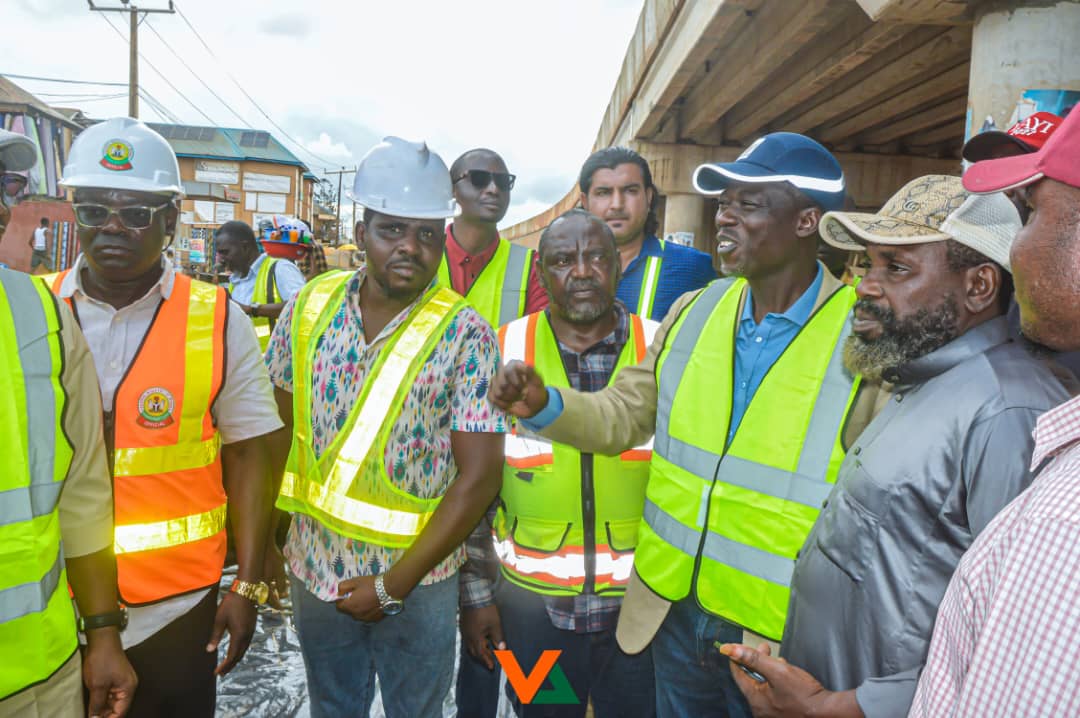
Lagos State Governor, Babajide Sanwo-Olu, has issued a 72-hour ultimatum to occupants of shanties and illegal structures built along the median of the Lagos-Badagry Expressway, ordering their immediate removal.
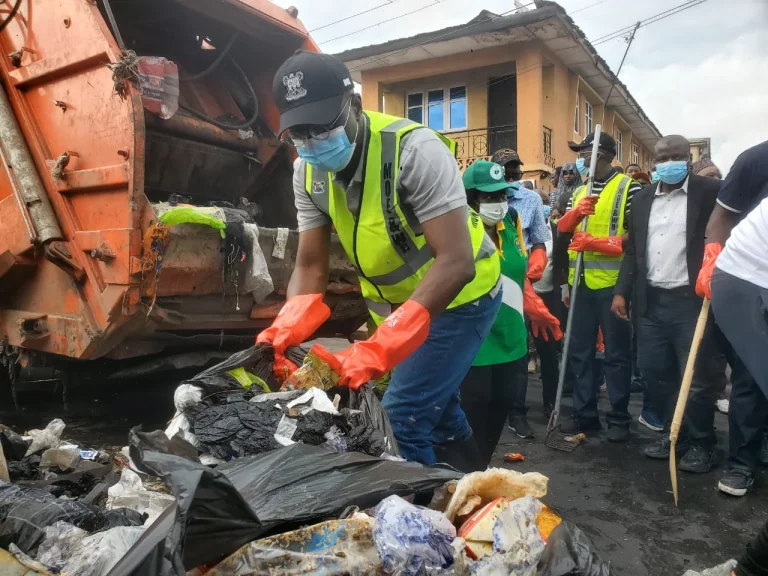
The governor announced the directive on Saturday after participating in the monthly environmental sanitation exercise in Surulere Local Government Area alongside his wife, Ibijoke Sanwo-Olu.
Sanwo-Olu said the state government would begin a major clearance operation on the corridor next week, with enforcement teams deployed to remove all unauthorised structures from Orile-Iganmu to Okokomaiko.
“This is the final notice to everyone occupying the median of the Lagos-Badagry Expressway. From next week, we are coming to clear the entire median. Everything there will go. Every illegal structure will be removed,” the governor said.
He stressed that the median of the 10-lane highway was not designed for trading activities or residential structures, warning that such developments undermine the value of the infrastructure investment made by taxpayers.
“It is not meant to be a market. It is not meant to be a place where people erect structures. It is a highway median, and we must preserve it,” he added.
The governor said thousands of personnel would be deployed for the exercise, adding that the government would not allow the international gateway corridor to be transformed into a slum.
Speaking on waste management, Sanwo-Olu disclosed that Lagos would soon strengthen its waste collection capacity with the addition of 150 compactors and the deployment of waste tricycles to inner communities.
He also revealed plans for a modern material recovery and recycling facility capable of processing about 4,250 metric tonnes of waste daily as part of efforts to move away from the traditional waste collection and dumping system.
The Commissioner for the Environment and Water Resources, Tokunbo Wahab, who inspected the Olusosun Landfill after the sanitation exercise, said the state was transitioning to a more sustainable waste management system.
Wahab explained that the government could no longer rely on the decades-old practice of collecting and dumping waste, noting that the new approach would focus on converting waste into resources for wealth creation and energy generation.
He added that Olusosun would serve as one of the transfer loading stations, moving about 2,500 metric tonnes of waste daily to the planned material recovery facility in Ikorodu, which is expected to commence operations before the end of the year.
The state government urged residents to support the reforms by maintaining proper waste disposal habits and paying for waste collection services to enable operators to provide efficient services.
