Argentina Accelerates Railway Upgrades Ahead Of Planned Privatization Drive
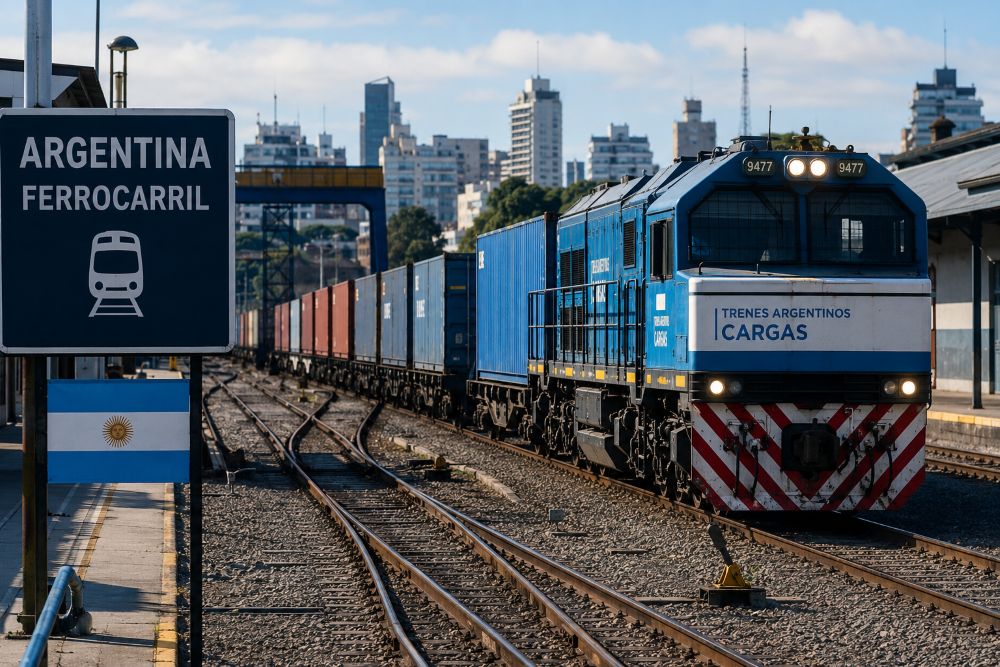
The Argentine government is intensifying investments in its railway sector as President Javier Milei pushes forward with plans to expand private sector participation and privatize key rail assets.
The investments are being carried out under a railway emergency programme declared in 2024 for both freight and passenger services, with a budget allocation of 1.3 trillion pesos (approximately $900 million) aimed at improving operational safety and modernizing infrastructure.
According to the Ministry of Economy, 31 per cent of the funding has been earmarked for track and bridge rehabilitation, 27 per cent for the acquisition and refurbishment of rolling stock and workshop facilities, while 26 per cent will support signalling upgrades. The remaining funds will be directed toward strategic infrastructure, electrical works and other interventions designed to reduce operational risks.
As part of the programme, the Railway Infrastructure Administration (ADIF) has launched a tender for the installation of Automatic Train Stop (ATS) systems on 140 locomotives operating freight services into the Buenos Aires Metropolitan Area. The project covers services run by NCA, Ferrosur, Ferroexpreso Pampeano and Belgrano Cargas y Logística.
Local media reports indicate that the ATS initiative could attract investments ranging between $20 million and $35 million. Bid submissions are expected to open on July 20, 2026.
A key focus of the government’s reform agenda is the privatization of Belgrano Cargas, the state-owned freight operator responsible for the Belgrano, San Martín and Urquiza railway networks. The company manages a 7,600-kilometre rail system that traverses 16 provinces, connects Argentina with Chile, Bolivia, Paraguay, Brazil and Uruguay, and links major export hubs, including Rosario and Buenos Aires.
Authorities plan to separately tender the company’s rail tracks, locomotives, wagons and maintenance workshops as part of the privatization process.
Meanwhile, the government has opted to extend existing private concessions for other freight rail operators. NCA’s concession was extended until 2032, Ferrosur’s contract until September 2026, and Ferroexpreso Pampeano’s concession until April 2027.
The administration has also begun designing a new contractual framework to govern future partnerships between the state and private operators across the national railway network.
In the passenger rail segment, while privatization remains under consideration, the government has yet to disclose details of any formal process. Nevertheless, ADIF continues to advance a broad portfolio of infrastructure projects aimed at modernizing railway operations.
Among the largest projects are major track renewal works on the Roca Line, where three tenders have been issued covering nearly 28 kilometres of quadruple-track railway between the Branden Bridge and Temperley Station. The works include track replacement, bridge rehabilitation and drainage improvements.
Similar modernization efforts are underway on the Sarmiento Line, where three separate tenders cover nearly 26 kilometres of electrified and non-electrified railway infrastructure between Once and Moreno.
On the San Martín Line, authorities have launched a tender for the renewal of 31.2 kilometres of track and upgrades to level crossings and signalling infrastructure. ADIF is also pursuing a major modernization of signalling and telecommunications systems on the Retiro–Palermo corridor in Buenos Aires.
The Urquiza Line is also benefiting from multiple infrastructure projects, including station accessibility upgrades, installation of new signalling systems and ATS technology, and maintenance works on key railway bridges.
The accelerated investment programme underscores the government’s strategy of improving rail infrastructure and operational safety while preparing the sector for a broader transition toward private participation and long-term concession arrangements.