


C2S+ Initiative Completes Distribution of First Batch of 50 Free Bicycles to Students at GTC, Ikotun
OLORUNDARE ENIMOLA, Lagos
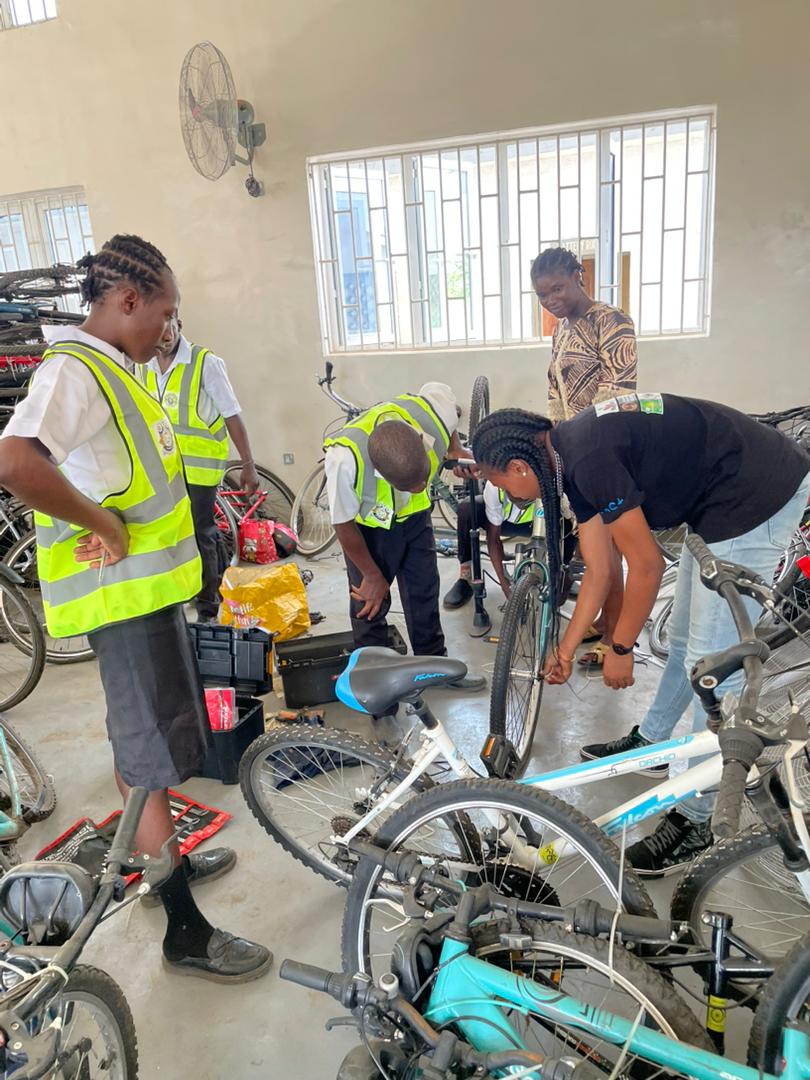
The C2S+ (Cycle to School Plus) Initiative has recorded a complete distribution of its first batch of 50 free bicycles to students of Government Technical College, Ikotun, in a move aimed at easing transportation challenges, improving academic performance and developing leadership qualities among disadvantaged learners.
The initiative, driven by the Gabriel Rotimi Aroge Empowerment Foundation (GRAEF), targets academically inclined students who live far beyond 5km from the school and whose parents struggle to meet daily transport costs.
According to the programme coordinator, Mr. Ashiru Al-Mahroof, the latest exercise marked the second phase of the distribution. While 20 bicycles were initially provisioned, only eight were released at the first stage due to safety and documentation requirements.
In the latest phase, additional beneficiaries received their bicycles, bringing the total number distributed so far to 50.
Mr. Al-Mahroof explained that beneficiaries were selected based on strict criteria, including but not limited to distance from school and financial need.
Verification measures included route survey mapping to confirm residential locations and meetings with parents to ascertain their economic circumstances.
“We are focused on students whose parents do not have the out-of-pocket funds for daily mobility. The goal is to reduce the time and stress associated with commuting so that students can arrive early, settle down, and focus on learning,” he said.
He added that parents were required to sign accountability and consent forms before bicycles were handed over. In cases where parents could not be physically present, official identification and alternative verification processes were used to ensure transparency.
Mr. Adekunle Abiodun, a lecturer in the Blocking and Concreting Department at the college, said the initiative has already yielded positive results.
“Since the inception of the programme, we have seen a great improvement in punctuality. Some students who used to arrive at 10:30 or 11:00 a.m., now arrive in school before the first period begins,” he said.
He noted that the bicycles have also reduced financial pressure on parents who previously spent between ₦2,000 and ₦3,000 daily on transportation and feeding.
The school has introduced a monitoring system to track beneficiaries’ punctuality and academic performance. The bicycle system governance is becoming stronger by the day as the school and NGO are set to jointly implement a single and dedicated leadership.
Students are required to sign in and out upon arrival and departure, while a supervisory team oversees compliance.
The bicycles are issued under a lease arrangement, primarily to junior students, and are returned to the school upon graduation for redistribution to new intakes.
Beneficiaries received reflective jackets provided by the School”s Old Students Association while their families had to provide helment and lock before taking possession of the bicycles.
Safety workshops have also been organized in inline with global road safety principles for cyclists and pedestrians. Road Safety advocates have visited the school to educate students on traffic rules and responsible cycling.
Favour Kelechi Okoh a volunteer and Route Mapper with the foundation, said students are being trained not only to ride but also to understand road usage and asset maintenance.
“Riding a bicycle is one skill; using the road responsibly is another. We organize workshops to teach them about traffic signs, safe riding practices, and basic bike maintenance,” she said.
Okoh added that the bicycles are of high quality and, with proper maintenance, could last for decades, stressing that technical support team which she is part is available to assist students with repairs and routine servicing.
To ensure sustainability of the bicycles, the foundation is working with alumni and hoping that corporate partners would help to provide a secure parking and storage facility for 100 bikes within the school premises.
GRA is desirous of an urgent intervention as they have put plans underway to construct a sheltered bike storage and a changing area where students can freshen up before classes.
Dr. Al-Mahroof called on corporate organisations to support the initiative as part of their Corporate Social Responsibility (CSR) programmes, noting that sponsors could brand the proposed storage facility or providr another set of hi-vis jackets and helment.
“We still need more partners, this is just the first 50; the next phase will target an additional 50 students to make GTC Ikotun the first super edu-mobility centre in the country. With proper infrastructure and support, we can expand the reach of this programme,” he said.
Several parents expressed gratitude, describing the bicycles as a major financial relief.
One parent, Mrs. Ajoke Bolaji, said she previously spent about ₦3,500 daily transporting two children to school from Ipaja area of Lagos. Another beneficiary’s guardian, Mrs. Ganiyat Kazeem, said her family faced similar expenses due to the long distance from Dalemo-Alakuko area where she lives with her children to school.
Mrs. Olowe Adejoke, a widow residing in a neighbouring town (Akute) in Ogun State, revealed that she had earlier appealed to the school to allow her children attend classes only two or three days a week because she could not afford daily transport costs of up to ₦7,000, revealing that the bicycles would now enable them attend school regularly.
Beneficiary students expressed appreciation and pledged to use the bicycles responsibly. Many said the initiative would help them arrive earlier for classes, reduce fatigue, and eliminate transport expenses.
“With this bicycle, I can come to school early and not miss any lesson. It also reduces the burden on my parents,” one student said.
Organisers say the C2S+ Initiative is designed to bridge the gap between free education and the hidden cost of access. While tuition may be subsidised, transportation remains a barrier for many students.
By providing bicycles to those most in need, the foundation hopes to promote punctuality, enhance academic performance, and reduce dropout risks—while fostering a culture of responsibility and road safety among young learners.
As the programme prepares for its next phase, stakeholders say continued community and corporate support will be critical to sustaining and expanding its impact.
