Oyetola, UK Seal £746m Deal To Upgrade Apapa, Tincan Ports
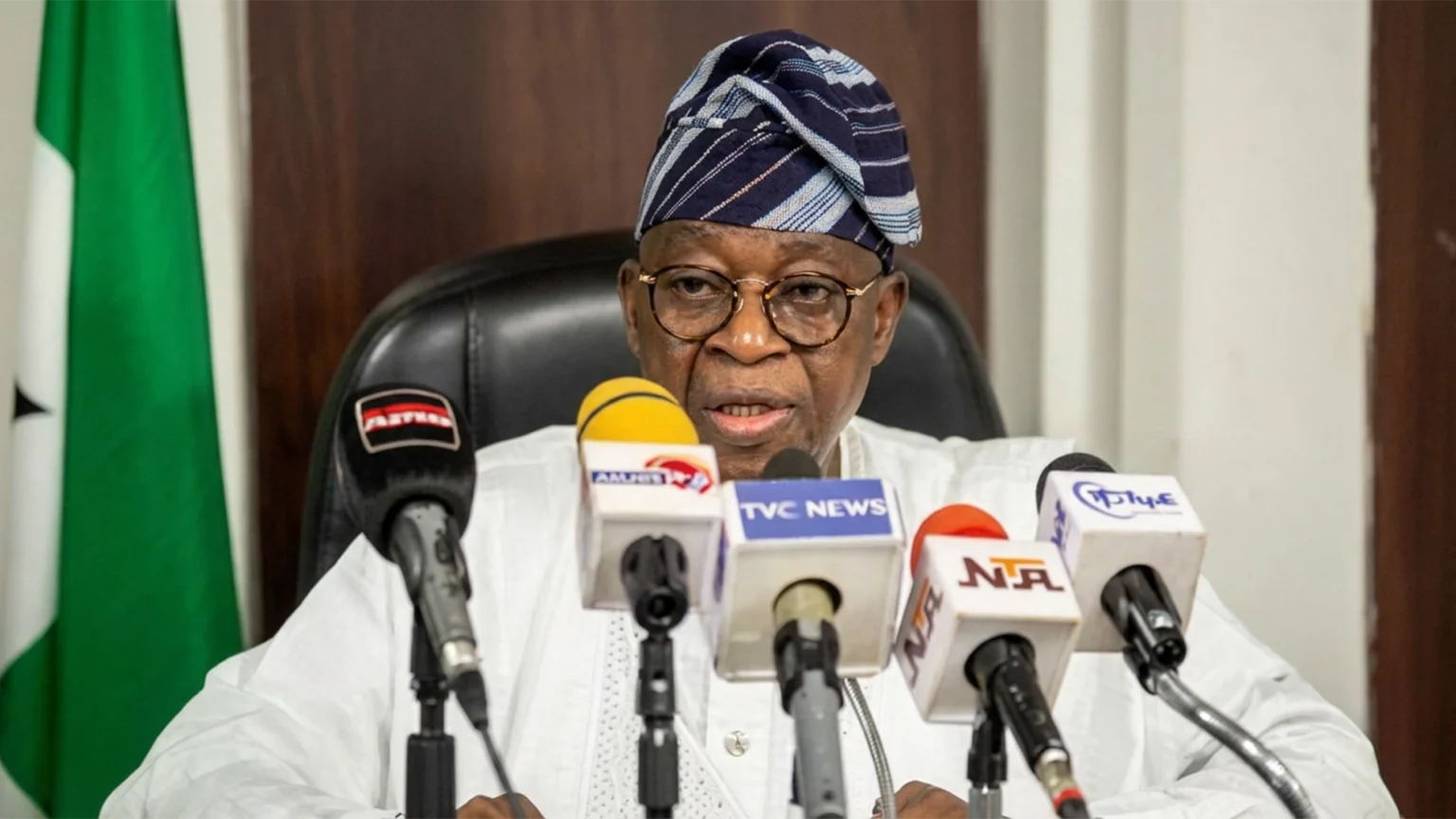
The Minister of Marine and Blue Economy, Dr. Adegboyega Oyetola, has unveiled a £746 million financing agreement with the United Kingdom that will deliver the modernisation of the country’s seaport infrastructure.
The financing arrangement, secured with the backing of UK Export Finance (UKEF), will fund the comprehensive modernisation and upgrade of the Apapa and Tin Can Island Port Complexes in Lagos, after 50 years of construction.
In a statement issued yesterday by the Special Adviser to the Minister, Dr. Bolaji Akinola, Oyetola said both ports handle over 70 per cent of Nigeria’s imports and exports, and serve as the central arteries of the nation’s maritime trade.
He said the financing agreement will be formally signed during President Bola Tinubu’s high-profile state visit to London on March 18 and 19, 2026.
The Minister described the financing package as a transformative milestone for the country’s port system, noting that the scale and scope of the modernisation project mark the first comprehensive overhaul of the facilities since their establishment.
The Lagos Port Complex Apapa, established in 1913, has remained Nigeria’s oldest and busiest seaport for more than a century, serving as the gateway for a vast proportion of the nation’s imports and exports.
The Tin Can Island Port Complex was later developed to complement Apapa and was officially commissioned on 14 October 1977.
Oyetola said that despite their strategic importance, neither facility has experienced a modernisation programme of this magnitude, making the initiative the most significant port upgrade undertaken by the Federal Government in almost 50 years.
According to Oyetola, the project forms a central pillar of the Federal Government’s broader agenda to unlock the vast economic potential of Nigeria’s marine and blue economy while restoring efficiency and global competitiveness to the country’s maritime infrastructure.
“For decades, Apapa Port and Tin Can Island Port have borne the weight of our national trade, yet their infrastructure has not kept pace with the scale and complexity of modern global shipping. What we are set to do is not merely an upgrade, but a comprehensive transformation that will bring our ports into alignment with international best practice,” he said.
He emphasised that modern infrastructure supported by digitalised and automated processes will significantly enhance efficiency, transparency and operational reliability.
Oyetola says that the government’s objective is to create a port system that is modern, competitive and capable of serving as a strategic maritime hub for West and Central Africa.
He said the modernisation programme will introduce advanced cargo-handling infrastructure, expanded port capacity and integrated digital systems designed to eliminate many of the operational bottlenecks that have historically slowed cargo movement through Nigeria’s busiest ports.
Oyetola noted that once completed, the reforms will fundamentally reshape the operational landscape of Nigeria’s maritime gateways, adding that vessel turnaround times are expected to decline significantly, while cargo dwell times within the ports will be sharply reduced as automated systems replace paper-based procedures and outdated manual processes.