Cross River Transport Fares Rise As Electric Buses Await Deployment
Transport fares have continued to rise in Cross River State, leaving workers, parents and students facing increased commuting costs as schools resume for the 2025/2026 academic session.
The development has heightened concerns over the delayed deployment of electric buses acquired by the state government under its mass transit initiative.
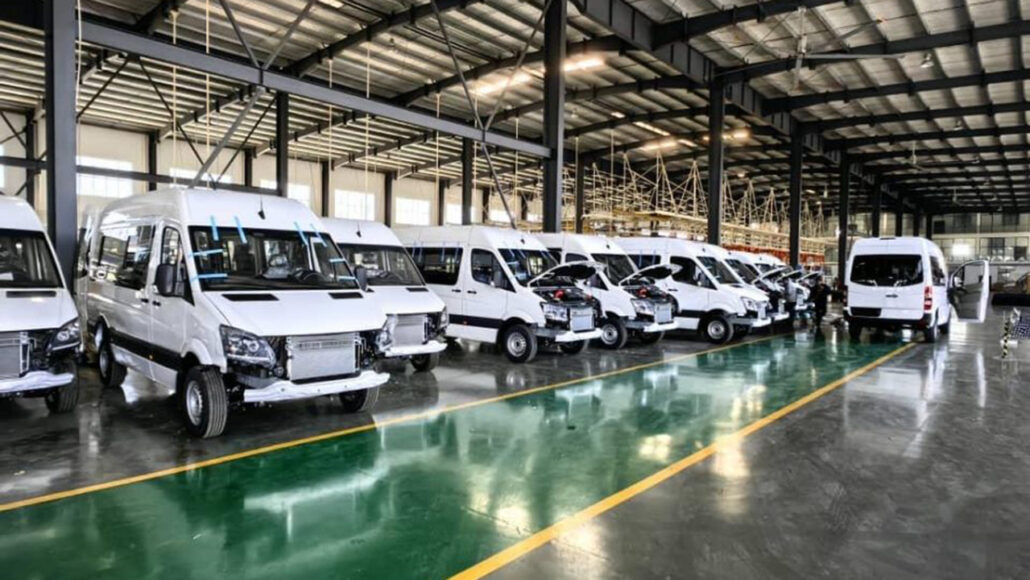
The buses, procured by the administration of Governor Bassey Otu to cushion the impact of the removal of fuel subsidy, are currently parked at the state-owned Construction and Fabrication Academy of West Africa along Murtala Mohammed Highway, Calabar.
The fare increases have been reported across Calabar South, Calabar Municipality, Akpabuyo, Bakassi and other parts of the state.
Checks in Calabar showed that commuters were already feeling the impact of the hike, particularly following the reopening of schools.
At Atimbo Road junction, schoolchildren and parents were seen struggling to secure tricycles, with fares reportedly increasing to as much as N800 per trip from the previous N600.
A petty trader and mother of three, Mrs Eme Bassey, said the increase had significantly raised her daily expenses.
She said she now spends more than N2,400 every day transporting her two children to school, expressing disappointment that the government’s promised buses were yet to commence operations.
Similarly, a 300-level student of the University of Calabar, Mary John, said some students had resorted to trekking long distances due to the high cost of transportation.
According to her, mini-buses operating between 8 Miles and the university now charge between N800 and N1,000 per trip.
Commercial drivers attributed the fare increases to the rising cost of petrol, which they said was selling for more than N1,400 per litre in Calabar, as well as the increasing cost of vehicle spare parts.
Transportation analysts described the situation as a gap between policy and implementation, warning that the delay in deploying the electric buses was adding to the financial pressure on households.
They also noted that some families were reportedly spending more than 40 per cent of their daily income on transportation, while the high fares were contributing to absenteeism in some public schools in Bakassi, Akpabuyo and Calabar South.
However, the state Commissioner for Transport, Ekpenyong Cobham, assured residents that the electric buses would soon be deployed.
Cobham explained that the government was deliberately taking steps to establish a sustainable operating structure for the buses rather than rushing into deployment without adequate arrangements.
He disclosed that the state had adopted a Public-Private Partnership model for the management of the buses and was currently finalising agreements with the preferred bidder.
According to him, the arrangement involves digital managers responsible for the revenue system, operators and infrastructure managers, while the government would provide the infrastructure as its counterpart contribution.
The commissioner added that charging infrastructure was being installed, with some components already delivered to the fabrication centre, while mobile charging stations had also been ordered.
He further disclosed that two Cross River indigenes had undergone three months of training in China to acquire maintenance skills and subsequently train other personnel locally.
Cobham said the buses would operate beyond intra-city routes in Calabar, extending to inter-local government routes across the state.
He expressed optimism that the electric buses would significantly reduce transportation costs and eventually contribute to lower food prices.
He said the choice of electric buses was based on their lower operating costs compared with fossil-fuel-powered vehicles.
The commissioner also dismissed concerns about the ability of the buses to operate in waterlogged areas, assuring residents that the vehicles were suitable for the planned operations.
Cobham stressed that the buses were wholly procured with funds from the Cross River State Government and were separate from the Federal Government’s CNG bus programme.
He assured residents that the buses would be deployed under a sustainable arrangement aimed at reducing the transportation burden across the state.