
Mixed Reactions Trail First Niger Bridge Lane Demarcation
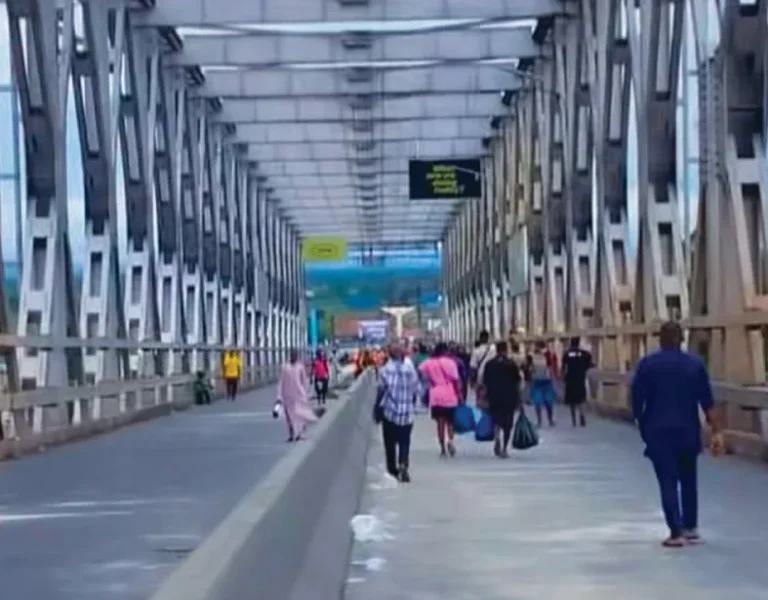
Motorists, commuters and residents have expressed mixed reactions to the Federal Government’s decision to demarcate the First Niger Bridge, separating traffic moving between Onitsha, Anambra State, and Asaba, Delta State, into two lanes.
The demarcation is part of the ongoing rehabilitation and maintenance of the bridge by the Federal Ministry of Works following the discovery of vandalised structural components, including portions of the expansion-joint steelwork.
The bridge was temporarily closed to traffic from September 7 to 21 to facilitate emergency repairs. However, the closure was extended by another week due to persistent rainfall.
The First Niger Bridge, which connects Onitsha and Asaba across the River Niger, was constructed in 1965 with a single, open roadway.
During the ongoing rehabilitation, construction workers commenced the installation of a central divider along the bridge to separate vehicles travelling towards Onitsha from those heading to Asaba.
The Minister of Works, David Umahi, had during an inspection of the bridge last week said the structure would remain closed until major repairs were completed. He explained that the demarcation and other rehabilitation works were intended to improve traffic management and enhance safety for road users.
While some motorists welcomed the development, describing it as a measure that could bring better traffic organisation and long-term order to the bridge, others raised concerns about the possible impact of the physical divider on the structure and emergency operations.
A motorist and Asaba resident, Mathew Ugar, who said he had used the bridge for more than two decades, argued that narrowing the roadway could create serious difficulties if a vehicle, particularly a heavy truck, broke down on the bridge.
According to him, such an incident could completely obstruct traffic, especially if there was insufficient space for other vehicles or towing equipment to manoeuvre.
Ugar urged the authorities to station towing vehicles at both ends of the bridge to ensure that breakdowns and other emergencies could be addressed promptly.
Another road user and public commentator, Emmanuel Eze, called for a thorough engineering assessment of the demarcation before the project is completed.
Eze expressed concern that the additional load from the concrete divider might not have been contemplated in the original design of the bridge.
He also warned that accidents, vehicle fires or truck breakdowns could become more difficult to manage because of the restricted space created by the new arrangement.
However, a commercial shuttle bus operator, Lilian Uzor, supported the demarcation, saying the separation of traffic would help improve order and reduce conflicts between vehicles travelling in opposite directions.
She, however, recommended that heavy-duty trucks be restricted from using the bridge and diverted to the Second Niger Bridge, which she said had greater capacity to accommodate such vehicles.
Meanwhile, the Federal Road Safety Corps has urged the Federal Ministry of Works to give further consideration to emergency response and traffic management arrangements on the bridge.
The FRSC RS5 Zonal Commanding Officer, ACM Cyril Matthew, made the call at the 2026 Special Marshals Zone Conference held at the Special Marshals Secretariat, Sector Command, Awka, Anambra State.
Matthew said the FRSC was still engaging with the Ministry of Works to find the best solution and ensure that road safety considerations were adequately incorporated into the rehabilitation plan.
He specifically raised concerns about emergency recovery operations, noting that some towing equipment available to the corps weighs as much as 70 tonnes and would require sufficient space to operate effectively.
He assured that the FRSC would continue to collaborate with the ministry and other relevant stakeholders to achieve a safe, efficient and sustainable traffic management system around the Niger Bridge corridor.